Nobody quits drinking expecting to become the angriest person in the room. You brace for cravings, maybe for rough sleep, and instead the thing that ambushes you is your own temper: snapping at your partner over dishes, seething in traffic, feeling a flash of genuine rage because someone chews too loudly. Around week one or two a genuinely unsettling thought shows up: I was nicer when I drank. Maybe alcohol was the only thing keeping me tolerable.
It was not, and you are not turning into a different person. Irritability is one of the most common and least discussed symptoms of early sobriety, right up there with the anxiety spike and the exhaustion, and it has clear neurochemical causes that resolve on a fairly predictable schedule. This article covers why quitting makes your fuse so short, the week-by-week timeline of getting your patience back, what genuinely helps in the moment, and how to tell ordinary recalibration from anger that needs real support.
Why Quitting Alcohol Makes You So Irritable
Several separate mechanisms stack on top of each other in the first weeks, which is why the crankiness can feel so much bigger than any single bad day should explain.
Your brain is rebounding from years of sedation. Alcohol works by boosting GABA, your brain's main calming signal, and suppressing glutamate, its main excitatory one. To keep functioning under regular drinking, your brain compensated: it turned the calming system down and the excitatory system up. Remove the alcohol and that compensation is suddenly unopposed. Your nervous system is running hot, wired for threat, with stress hormones elevated around the clock. In that state, minor annoyances genuinely register as bigger than they are. It is not a character flaw, it is chemistry with the volume knob stuck high, the same rebound that drives the shakiness and restlessness of the withdrawal phase.
You just deleted your only off-switch. For years, irritation had a standard treatment: a drink. Bad day at work, drink. Argument, drink. The drink never resolved anything, but it reliably muted the feeling, which means the skill of actually processing frustration got no practice. Early sobriety is the first time in years you are experiencing annoyance at full strength with no exit, and like any unpracticed skill, handling it starts out clumsy.
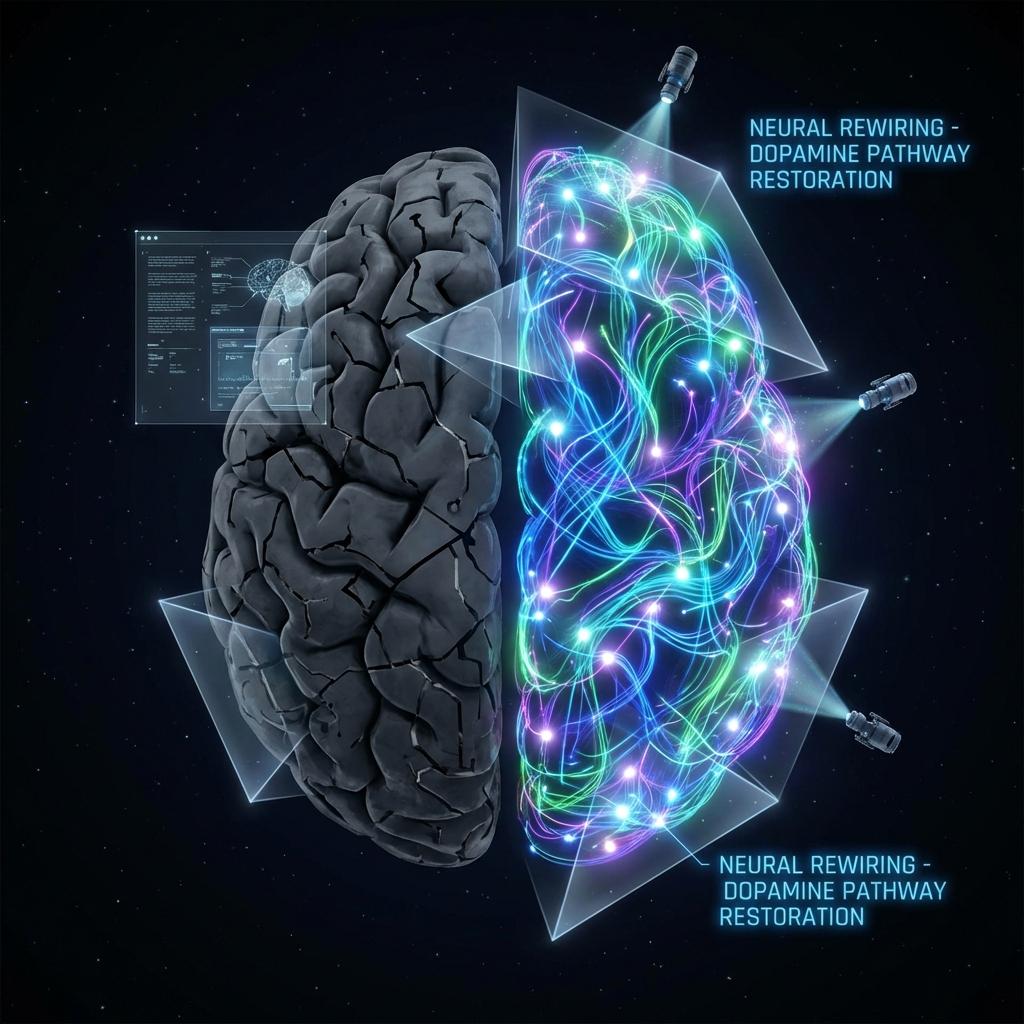
Your reward system is running below baseline. Regular drinking trains your brain to expect large, artificial dopamine hits, and it adapts by producing less and listening less. In early sobriety you are left with a dopamine system temporarily running under its normal level, and low dopamine does not just flatten pleasure, it shortens frustration tolerance. Small obstacles feel disproportionately grating because the neurochemistry that normally says "fine, whatever" is under reconstruction.
You are tired and your blood sugar is a rollercoaster. Broken sleep and irritability are inseparable, and early sobriety sleep is famously broken while your brain rebuilds real sleep architecture out of years of sedation. Add the blood sugar spikes and crashes that come with early-sobriety sugar cravings and you get the classic hangry-plus-exhausted state where patience goes to die.
Feelings you muted are coming back online. Alcohol did not only numb the bad days, it numbed everything, including anger you had legitimate reasons to feel: about your job, a relationship, old wounds, the drinking itself. Some of what surfaces in early sobriety is not new anger, it is backlogged anger finally getting its hearing. Uncomfortable, but it is information, and it is part of the broader emotional swings of early sobriety rather than a malfunction.
If you're still choosing a tracking app, our guide to the best sobriety apps compares the top options side by side.
The Irritability Timeline: When Does It Get Better?
Everyone's curve is different, and how long and how heavily you drank matters a great deal. But the arc below matches what most regular drinkers report.
Days 1 to 3: withdrawal edge. Irritability here is simply part of acute withdrawal, traveling with the sweats, poor sleep, and anxiety. Your nervous system is at its most overclocked. Expect to have the patience of a toddler and plan accordingly: fewer obligations, more slack.
Week 1 to 2: the hair-trigger phase. For many people this is the peak. The acute symptoms fade but the rebound chemistry is still loud, sleep is still rubbish, and the novelty adrenaline of quitting is wearing off. This is the stretch where partners and coworkers suddenly seem unbearable and where people most often conclude that sobriety is making them worse. It is not. It is the loudest part of the reset.
Weeks 3 to 6: better, with ambushes. The baseline settles noticeably, then an irritable day arrives out of nowhere and feels like a relapse of mood. That jaggedness is normal, and it often alternates with stretches of pink-cloud optimism. The trend line matters more than any single day: bad days should be getting shorter, milder, and further apart.
Months 2 to 3: your patience comes back. As sleep architecture recovers and dopamine signaling normalizes, most people find their old tolerance returning, and many find something better than their old tolerance, because the low-grade hangover irritability that colored their drinking years is gone too. Things that used to spark a flash of anger start earning only a shrug.
Beyond 3 months: occasional waves for some. Long-term heavy drinkers can see irritability revisit in waves as part of post-acute withdrawal syndrome, typically arriving unannounced for a few days and lifting again. The waves shrink with time. Persistent, worsening anger months into sobriety is a different pattern, and it deserves attention rather than endurance, more on that below.
Is This the Real Me? The "Dry Drunk" Question
Somewhere in the angry weeks, most people privately ask a frightening question: what if alcohol was not causing my problems, what if it was containing me? The recovery world has an old and somewhat loaded term, "dry drunk," for someone who has stopped drinking but still runs on the old resentments and reactivity. People find the label and worry it is a diagnosis.
Two things are worth separating. The first is temporary chemistry: everything in the mechanism list above, the rebound, the missing off-switch, the dopamine deficit, produces anger that fades on the timeline as your brain recovers. That is not a personality, it is a phase, and it describes the overwhelming majority of early-sobriety irritability.
The second is real but different: quitting drinking removes the anesthetic, and whatever the anesthetic was covering is still there. Unresolved resentments, a job you hate, a relationship that runs on old scripts, a harsh inner critic that alcohol used to shout down. Sobriety does not create those, it reveals them, and revealing them is genuinely useful, because problems you can see are problems you can work on. The honest version of the "dry drunk" idea is not "you are broken without alcohol." It is "the drink was postponing some homework, and the homework is now due." Neither version means the anger is who you are.
What Actually Helps
You cannot skip the recalibration, but you can stop pouring fuel on it, and you can stop letting it cost you relationships while it passes.
- Buy ninety seconds. The physiological surge of anger, the hot face and tight chest, peaks and starts to fade within a couple of minutes if you do not feed it with escalation. Name it silently ("this is the withdrawal talking"), breathe out slowly, and delay your response. You do not need to feel calm, you only need to outlast the spike before you speak.
- Run the HALT check. Hungry, Angry, Lonely, Tired: the classic recovery checklist earns its reputation. An enormous share of early-sobriety rage dissolves after a meal, a nap, or ten minutes of human contact. Check the boring causes before concluding that your marriage is the problem.
- Move the energy out of your body. Anger is physiological arousal, and exercise is the most reliable drain for it: a hard walk, a run, weights, anything that lets the stress chemistry do what it was built for. Twenty minutes of movement often accomplishes what an hour of stewing cannot.
- Protect sleep and regular meals. Every mechanism on the list above gets worse when you are exhausted and running on vending-machine sugar. A fixed sleep schedule and protein at regular intervals are unglamorous, and they flatten more irritability than any mental trick.
- Tell the people close to you what is happening. A one-line briefing ("I quit drinking, the first weeks make me short-tempered, it is temporary, it is not about you") converts your household from bewildered targets into allies. And when you do snap, repair fast and specifically. The apology habit matters more than a perfect record.
- Watch your patterns. Irritable days rarely strike at random: they cluster after bad nights, skipped meals, and predictable trigger situations. Some people keep note of angry days alongside their day count and find the pattern obvious within two weeks, which turns "I am an angry person now" into "I am a person who needs lunch and eight hours."
When Anger Needs More Than Time
Most early-sobriety irritability is loud but harmless, and it bends to the timeline above. Some is not, and it is worth being honest about the difference.
Take it seriously if your anger frightens you or anyone else, if it tips into throwing things, driving dangerously, or any physical aggression, if it arrives with hopelessness or the flat heaviness of depression, or if months into sobriety it is holding steady or getting worse rather than fading. Those patterns suggest something underneath the withdrawal chemistry: depression, an anxiety disorder, old trauma, or simply a lifetime of unlearned anger habits that deserve actual coaching. Therapy works on anger, anger-management programs exist because they help, and telling a professional "I quit drinking and I am furious all the time" is a completely normal opening sentence. Getting help with the homework is not failing sobriety, it is doing sobriety properly.
The anger of early sobriety is not your true self escaping. It is a nervous system that spent years being chemically silenced, learning to speak at a normal volume again, and it learns fast.
Frequently Asked Questions
How long does irritability last after quitting alcohol?
For most regular drinkers the sharpest irritability lasts one to two weeks, tracking the acute withdrawal phase and the worst of the sleep disruption. It then fades in a jagged line through weeks three to six, with genuinely better emotional steadiness arriving for most people between one and three months as sleep and dopamine signaling recover. Long-term heavy drinkers may see extra irritable waves for several months as part of post-acute withdrawal, but the waves get shorter and milder over time.
Why am I so angry now that I have stopped drinking?
Because several things hit at once: your brain's excitatory chemistry is rebounding from years of being suppressed by alcohol, your dopamine system is temporarily running below baseline, your sleep is being rebuilt, and the substance you used to mute every frustration is gone. On top of the chemistry, feelings that drinking kept numbed, including legitimate old anger, are coming back online. The combination makes small annoyances register as big ones. It is temporary, and it improves on roughly the same timeline as the other withdrawal symptoms.
What is dry drunk syndrome, and do I have it?
"Dry drunk" is an informal recovery term for someone who has stopped drinking but still runs on the old resentments, blame, and reactivity that fueled the drinking. It is not a medical diagnosis, and it does not describe the ordinary irritability of the first sober weeks, which is driven by withdrawal chemistry and fades on its own. The label only starts to fit when anger and resentment persist for months and nothing underneath is being addressed. The fix is not more willpower, it is working on the underlying material, often with a therapist or support group.
Can quitting alcohol cause mood swings?
Yes, and they are among the most common early-sobriety experiences: irritable mornings, weepy afternoons, euphoric stretches, flat days, sometimes all in one week. Alcohol compressed your emotional range for years, and the full range coming back online is jarring before it is pleasant. Mood swings typically settle substantially within four to eight weeks. If they include hopelessness, an inability to feel anything, or thoughts of self-harm, that is depression territory and deserves professional support rather than patience.
How do I control my temper in early sobriety?
Work both ends. In the moment: pause and let the ninety-second physiological spike pass before you respond, name what is happening, breathe out slowly, and leave the room if you need to. In the background: guard your sleep schedule, eat regular meals with protein, exercise most days, run the HALT check when irritation spikes, and warn the people around you that a temporary short fuse is part of your recovery. If your temper still feels dangerous or unmanageable after the first couple of months, an anger-focused therapist is the efficient next step.
A short fuse is temporary, and it is easier to believe that when you can see the days stacking up. Sober Tracker is a private, no-account day counter that turns the slow return of your patience into visible progress, one day at a time.
This article is educational and not a substitute for medical advice. Alcohol withdrawal can be serious, especially for long-term heavy drinkers, so talk to a doctor before quitting if you drink heavily every day. Seek prompt help if your anger involves violence or frightens you, or if it comes with hopelessness or thoughts of self-harm.