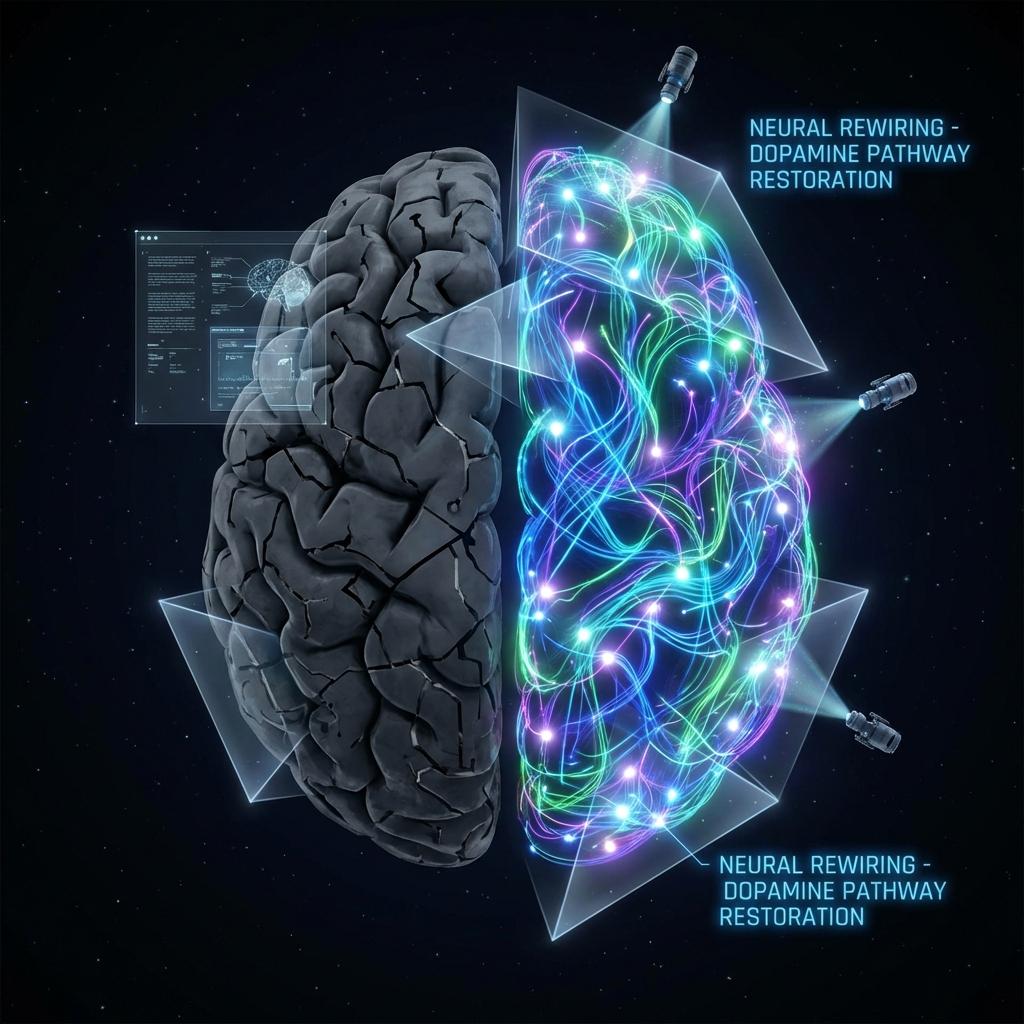
You quit drinking to feel better. But a few weeks in, you don't feel "better." You feel flat. Grey. Uninspired.
You might look at a beautiful sunset or eat a delicious meal and feel... nothing.
This isn't just you being "ungrateful." This is biology. specifically, it's Anhedonia, and it’s a direct result of how alcohol has hijacked your brain's dopamine system. The good news? It is temporary, and you can hack your biology to speed up the repair process.
The Hijacked Brain: What Alcohol Did
Dopamine is often called the "pleasure molecule," but it's really the pursuit molecule. It tells your brain, "That was good. Do it again to survive."
Natural rewards like food, sex, and social connection release moderate amounts of dopamine. Alcohol, however, releases a flood. It artificially spikes dopamine levels far beyond what nature intended.
Over time, your brain adapts to this flood by:
- Reducing dopamine production.
- Eliminating dopamine receptors.
Think of it like a loud concert. If the music (alcohol) is too loud, your brain puts in earplugs (down-regulating receptors). When you quit drinking, the music stops, but the earplugs are still in. Normal life—a walk in the park, a good movie—is too quiet to hear.
This causes the "blah" feeling. You aren't depressed; you are dopamine deficient.
Not sure which app to use? We compared the top sobriety apps to make choosing easier.
The Timeline of Repair
The brain is incredibly plastic. It wants to heal. But it takes time to take the earplugs out.
- Days 1-14: Acute withdrawal. Dopamine is crashing. Anxiety and irritability are high.
- Weeks 2-6: The "Flatline" (Anhedonia). Mood swings, boredom, and a sense that life lacks color. This is where most people relapse because they just want to feel something.
- Months 3-6: Re-sensitization. Receptors grow back. You start to enjoy small things again—the smell of coffee, a good laugh, a clear morning.
How to Speed Up the Rewiring
You don't have to just wait. You can actively stimulate your system to heal faster using Natural Dopamine Boosters.
1. Cold Exposure (The Ice Bath)
Cold water immersion (60°F/15°C or lower) has been shown to increase dopamine by 250%—and unlike alcohol, this increase is sustained for hours, not minutes. Start with a cold shower for 30 seconds.
2. Early Morning Sunlight
Viewing sunlight within an hour of waking sets your circadian rhythm and triggers the release of serotonin and dopamine. It’s the ultimate natural antidepressant.
3. The "Small Win" Strategy
Dopamine is released when we achieve a goal. In early sobriety, big goals are overwhelming. Set micro-goals:
- Make your bed.
- Do 10 pushups.
- Log your day in your sobriety tracker. Check them off. That small hit of satisfaction is literal medicine for your brain.
Alcohol is rarely the only quick hit. Scrolling, snacking and constant phone checks often get louder once the drinks stop. Our sister app Baseline has a guide to the dopamine reset after sobriety with a simple daily practice for those habits too.
4. High-Intensity Exercise
Zone 2 cardio is great for health, but for a dopamine hit, you need intensity. Sprints or heavy lifting release endorphins and dopamine that essentially "shock" the system back into feeling good.
Conclusion: The Color Will Return
If you are in the grey zone right now, keep going. Your brain is construction site. It is messy and loud, but you are building something magnificent.
One day soon, you will laugh at a joke and really mean it. You will watch a sunrise and feel a chill down your spine. The color is coming back. You just have to keep the canvas clean long enough to see it.