You reach for your coffee the morning after a heavy night, and your hand will not hold still. Or you are three days into quitting, trying to sign your name, and the pen wobbles like you are writing on a train. Alcohol shakes are one of the most visible, most unnerving symptoms of both hangovers and early sobriety, and they raise two urgent questions: why is my body doing this, and when will it stop?
The short answer: the shakes are your nervous system running hot after alcohol's sedative blanket is pulled away. For most people they peak within one to three days of the last drink and fade within a week. But there is an important caveat, because in a minority of heavy, long-term drinkers, tremor is the opening act of a withdrawal syndrome that can turn medically dangerous. This article walks through the mechanism, the realistic timeline, the difference between harmless and hazardous shaking, and what actually helps your hands go quiet again.
Why Alcohol Makes You Shake
Alcohol is a depressant. Every time you drink, it amplifies GABA, the brain's main calming neurotransmitter, and suppresses glutamate, the main excitatory one. Your nervous system, which is built to maintain balance, adapts: it turns down its own GABA sensitivity and turns up glutamate signaling to compensate for the constant sedation.
That adaptation is invisible while you keep drinking. The moment alcohol leaves your bloodstream, it is very visible indeed. The sedation vanishes, but the compensations remain: too little calming signal, too much excitatory signal. Your nervous system is suddenly running in overdrive, and the tremor in your hands is that excess electrical noise reaching your muscles.
Several other factors pile on:
- Adrenaline overdrive. Withdrawal triggers a surge of stress hormones. Your heart rate climbs, your muscles tense, and the fine motor system gets jittery, the same physiology as severe stage fright.
- Low blood sugar. Alcohol disrupts the liver's glucose management, and a crashing blood sugar level produces shakiness on its own.
- Dehydration and electrolytes. Alcohol is a diuretic, and depleted magnesium and potassium make muscles and nerves more excitable.
- Sleep deprivation. Alcohol wrecks deep sleep, and an exhausted nervous system trembles more easily.
This is why the morning-after shakes and the quitting shakes are the same phenomenon at different intensities. A hangover tremor after a single heavy night is a mild, short rebound. Withdrawal tremor after years of daily drinking is the same rebound at a much larger scale, because the brain has had much longer to adapt.
One pattern deserves special attention: if you have started needing a morning drink to steady your hands, that is not a quirk. It is the textbook sign that your body has become physically dependent and is going into withdrawal overnight, every night. That pattern is a strong reason to involve a doctor in your quit plan rather than white-knuckling it alone.
If you're still choosing a tracking app, our guide to the best sobriety apps compares the top options side by side.
The Timeline: How Long Do Alcohol Shakes Last?
Every body is different, and the honest range is wide: hours for a light drinker with a hangover, weeks for a long-term heavy drinker. But research on alcohol withdrawal describes a consistent arc.
Hours 6 to 12: onset. Tremor is usually the first withdrawal symptom to appear, often alongside anxiety, sweating, and a racing pulse. If you drank heavily and regularly, you may notice it before your last drink has fully worn off.
Hours 24 to 72: the peak. This is when shaking is at its worst, and it is also the highest-risk window for the serious complications discussed below. Hands are the most obvious site, but some people feel internal vibrations, a shaky voice, or unsteady legs.
Days 4 to 7: the fade. For most people the visible tremor eases substantially by the end of the first week, in step with the rest of acute withdrawal. Our day-by-day withdrawal timeline maps this whole first week in detail.
Weeks 2 to 8: the echo. A fine tremor that flares with stress, caffeine, or missed meals can linger for weeks after the acute phase. This is the nervous system recalibrating its GABA and glutamate balance, and it overlaps with other slow-settling symptoms like heart palpitations and anxiety spikes. It is annoying, but it is healing in progress, not damage in progress.
Months 1 to 12: full quiet. In long-term heavy drinkers, subtle shakiness under stress can take months to disappear completely as the nervous system finishes rebalancing. A persistent, prominent tremor beyond this window deserves a medical workup, because at that point alcohol may not be the whole story.
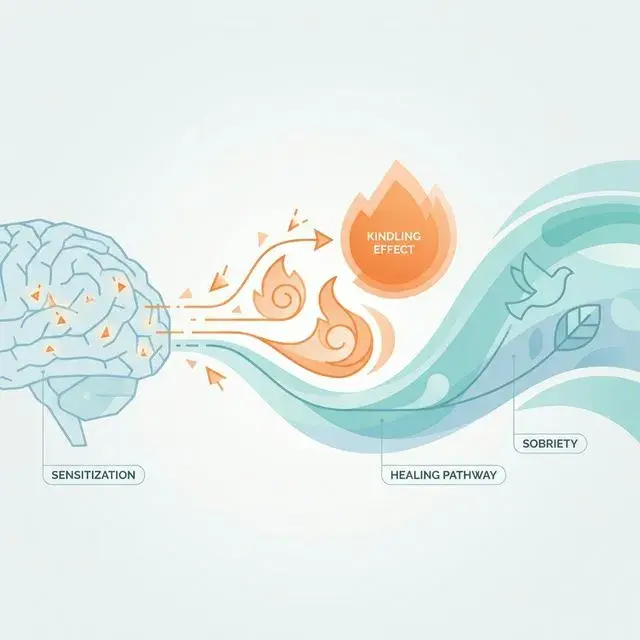
Two factors reliably stretch the timeline: how much and how long you drank, and how many times you have been through withdrawal before. Repeated cycles of quitting and relapsing sensitize the brain so that each withdrawal hits harder than the last, a phenomenon called the kindling effect. It is one of the strongest physiological arguments for making a quit stick.
When Shaking Is a Warning Sign
Most alcohol shakes are miserable but harmless. A minority are not, and the difference matters enough to state plainly.
Severe alcohol withdrawal can escalate to seizures, typically within the first 12 to 48 hours, and to delirium tremens (DTs), a medical emergency involving profound confusion, hallucinations, fever, and dangerous swings in heart rate and blood pressure. DTs affect an estimated 3 to 5 percent of people withdrawing from heavy, sustained drinking, usually starting 48 to 72 hours after the last drink, and untreated it can be fatal. Treated in a hospital, it almost never is.
Get medical help urgently if shaking comes with any of the following:
- Confusion, disorientation, or seeing and hearing things that are not there
- A seizure, or any history of withdrawal seizures in the past
- Fever, drenching sweats, or a heart racing above roughly 120 beats per minute at rest
- Vomiting that prevents keeping fluids down
- Tremor so severe you cannot drink from a cup or walk steadily
And plan ahead rather than reacting: if you drink heavily every day, have been drinking for years, have had bad withdrawals before, or need alcohol in the morning, talk to a doctor before you stop. Medically supervised withdrawal, often with a short course of medication that calms the overexcited nervous system, turns a dangerous week into a safe one. Quitting alcohol is one of the best things you can do for your body; quitting abruptly and alone after heavy dependence is the one version of it that can genuinely hurt you.
Is It Withdrawal, or Something Else?
Not every tremor in a drinker is an alcohol tremor, and quitting is often the moment people finally notice other things. A few look-alikes worth knowing:
- Caffeine and nicotine. Early sobriety usually comes with more coffee. A caffeine tremor looks identical, and the fix is embarrassingly simple.
- Essential tremor. A common, often hereditary condition that causes hand shaking, classically improved (temporarily) by alcohol. Some people were unknowingly self-medicating it for years, and it becomes obvious only after quitting.
- Anxiety. Shaking during stressful moments without any other pattern often tracks anxiety rather than withdrawal chemistry.
- Thyroid problems, low B12, medication side effects. All plausible in someone with a heavy drinking history, and all testable with routine blood work.
- Liver-related flapping tremor. A coarse, wing-beating flap of the outstretched hands, called asterixis, can signal advanced liver disease and needs prompt medical attention.
The practical rule: a tremor that appeared with withdrawal and fades over days to weeks is following the expected script. A tremor that persists, worsens, or was there long before you quit deserves a doctor's visit and some basic tests.
What Actually Helps
You cannot force the nervous system to rebalance overnight, but you can stop making the tremor worse and give the recalibration everything it needs.
- Eat regularly. Stabilizing blood sugar removes one entire cause of shakiness. Small meals with protein and complex carbs every few hours beat two large ones.
- Rehydrate with electrolytes. Water plus foods rich in magnesium and potassium, or an electrolyte drink in the first days. Depleted minerals make excitable nerves worse.
- Ration the caffeine. Two cups of coffee on a rebounding nervous system can double a fine tremor. Keep it modest for the first couple of weeks.
- Move gently. Walking and light exercise burn off stress hormones and improve sleep. Save the maximal workouts for after the acute phase.
- Sleep like it is your job. The tremor is measurably worse after a bad night. Early sobriety sleep is rough anyway, so stack the deck: dark room, regular schedule, no screens late.
- Take B vitamins seriously. Heavy drinking depletes thiamine, and replacing it protects the nervous system during withdrawal. This is standard practice in every detox protocol and worth discussing with your doctor.
- Do not treat the tremor with alcohol. A drink will stop the shaking within minutes, which is exactly the trap: it resets the withdrawal clock and deepens the dependence that caused the tremor in the first place.
The Reassuring Bottom Line
Alcohol shakes feel alarming because they are involuntary: your own hands, doing something you did not ask for. But in the great majority of cases they are a temporary, mechanical rebound with a predictable arc: appear within hours, peak by day three, fade within a week, echo faintly for a few weeks under stress and caffeine, then gone. They are the visible, trembling proof of how hard your nervous system was working to function under sedation, and how quickly it gets to work restoring balance once the sedation stops.
The days when the shaking quiets down are also some of the most motivating early milestones there are. Watching a steady hand come back, day by counted day, makes the invisible rebalancing feel real, and tracking those days in a sobriety counter turns the roughest week of the process into the foundation of a streak.
Riding out the shaky first week? Sober Tracker is a private, no-account streak counter that turns each steadier day into visible progress, one alcohol-free day at a time.
This article is educational and not a substitute for medical advice. Alcohol withdrawal after heavy, sustained drinking can be dangerous and in severe cases life-threatening; if you are physically dependent on alcohol, have had withdrawal symptoms or seizures before, or need a morning drink to steady your hands, plan your quit with a healthcare provider rather than stopping abruptly alone. Seek urgent care for confusion, hallucinations, seizures, fever, or a racing heart during withdrawal.