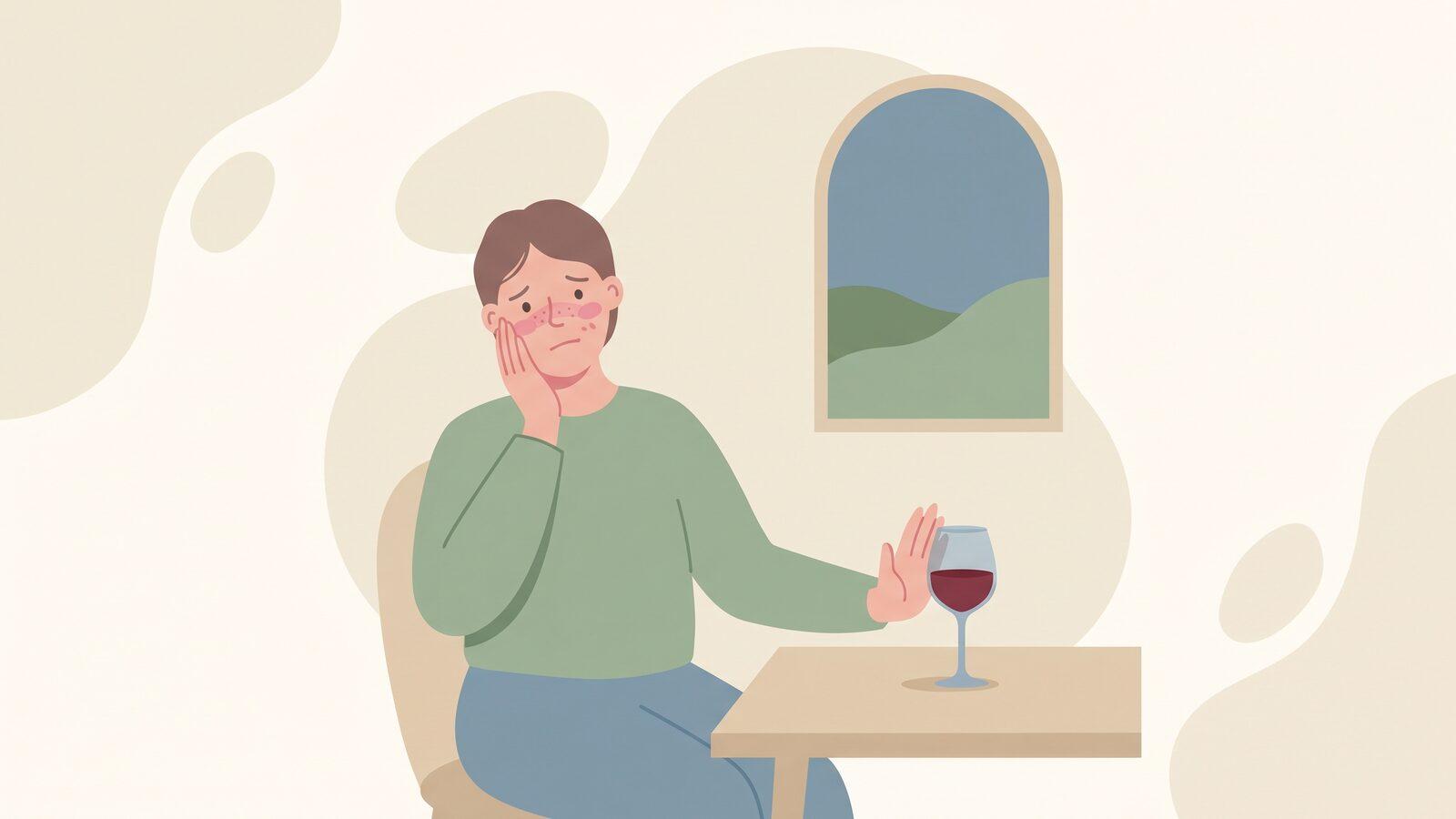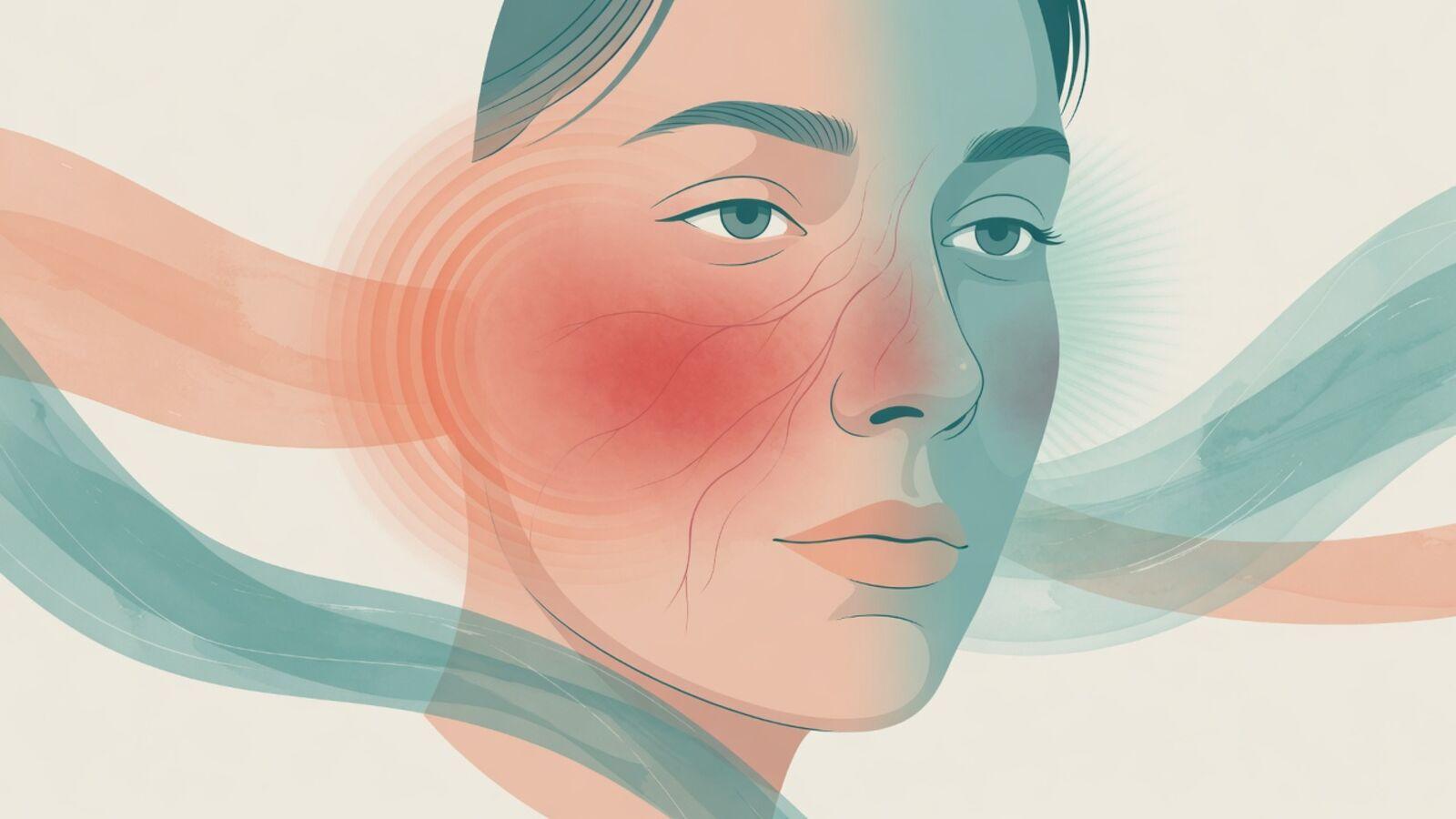
It starts in the middle of a glass. Heat rises through your cheeks, your nose goes blotchy, and by the time you put the drink down your face looks sunburned in a room with no sun. People call it a flush, a wine face, sometimes "alcoholic rosacea." That last name is the most misleading of the three, and it is one reason so many people with a real skin condition spend years blaming themselves for a drinking problem they may not have.
Rosacea is a chronic inflammatory disease of the face. Alcohol is one of its most reliable triggers, documented by patient surveys and by dermatology research, but it is not the same thing as the genetic alcohol flush, and it is not proof that you drink too much. This article separates those diagnoses, explains why a drink lights a flare so fast, ranks which beverages patients actually name, and is honest about what quitting does and does not reverse.
Rosacea Is Not the Alcohol Flush
The two get collapsed because both turn a face red. They are not the same disease.
Rosacea is a long-running condition of the central face: persistent redness, flushing, visible blood vessels, acne-like bumps without blackheads, and in some people irritated, watery eyes. It typically begins after 30, tends to be diagnosed more often in women, and can be more severe in men. Fair skin that blushes easily is the classic risk profile, though rosacea occurs in every skin tone, where the redness can read as brown or purple instead of pink. There is no single cause. Dermatologists describe a mix of neurovascular dysregulation, innate immune activity, and a higher load of Demodex mites on affected skin. It flares and remits. It is treatable. It is not a character flaw.
The alcohol flush reaction is different. It is a metabolic response, often genetic, in which acetaldehyde piles up because the ALDH2 enzyme cannot clear it. The face goes hot and red within minutes of a drink, often with a racing heart and nausea, and the redness is a warning about a carcinogen in your tissues, not a chronic skin disease. You can have the flush without rosacea, and you can have rosacea without ever flushing from a single sip.
A third mix-up is "drinker's nose." Rhinophyma, the thickened, bumpy tissue that can enlarge the nose in severe rosacea, was historically treated as a mark of alcoholism. It is not. Plenty of people with rhinophyma drink little or not at all, and plenty of heavy drinkers never develop it. The American Academy of Dermatology is explicit on the larger point too: people who never drink alcohol still get rosacea.
If you're still choosing a tracking app, our guide to the best sobriety apps compares the top options side by side.
Why Alcohol Lights a Flare So Fast
Alcohol does not have to "cause" rosacea in order to be a brutal trigger for it. Several mechanisms stack, which is why so many patients can name the glass that started the evening's redness.
It opens facial blood vessels. Alcohol is a vasodilator. In skin that already flushes too easily, that extra widening of the small vessels in the cheeks and nose is visible within minutes. Heat, warmth, and a burning or stinging feeling often arrive with it.
It raises core temperature. Heat is one of rosacea's classic environmental triggers, in the same family as sun, hot rooms, and hard exercise. Alcohol increases body temperature, so a drink is doing thermally what a hot bath does, on top of the vessel effect.
Fermented drinks deliver histamine. Red wine in particular is high in histamine from fermentation and aging. Alcohol also interferes with the enzyme that clears dietary histamine. For a face that is already inflamed, that extra histamine load is an accelerant, which is why the histamine flush and the rosacea flare can look similar in the moment even though the underlying diagnoses differ.
It feeds the inflammatory baseline. Rosacea sits on an inflammatory continuum. Alcohol is a systemic inflammatory load in its own right, which we cover in the broader guide to how drinking keeps the body inflamed. Removing that load does not rewrite the genetics of rosacea, but it takes away a daily reason for the immune and vascular systems of the face to stay on alert.
The speed matches the mechanism. In a National Rosacea Society survey of 353 patients, 76% of those who flared from alcohol said the symptoms started immediately. Another 10% noticed it later the same day, and 14% the next day. It does not usually take a binge. In that same survey, 31% said one drink was enough, 31% said half a drink, and 15% said a sip or two.
Which Drinks Patients Actually Name
The ranking is not folklore. It is surprisingly consistent.
Alcohol itself was a trigger for nearly 76% of those NRS respondents. Among specific drinks, red wine was far and away the worst: 72% said it had caused a flare. White wine came next at 49%, then beer at 42%. Vodka was named by 28%, champagne by 25%, whiskey and rum by 22% each, tequila by 20%, liqueurs by 17%, and malt liquor by 11%.
That order is useful and easy to misuse. It does not mean vodka is "safe for rosacea." It means that among people who already have the condition, red wine is the drink most likely to set their face off, and clear spirits are the ones fewer people name. Individual triggers still vary, which is why dermatologists tell patients to keep a flare diary rather than trust a universal list.
There is a second, separate question: does drinking raise the chance of getting rosacea in the first place, not just flaring it? A 2017 analysis from the Nurses' Health Study II, following tens of thousands of US women, found that alcohol intake was associated with a higher risk of new rosacea in a dose-dependent way. In that incidence data, white wine and liquor showed the clearer associations; beer and red wine did not. That sounds like a contradiction until you separate the two jobs alcohol can do. Red wine is the standout trigger for people who already have rosacea. White wine and liquor showed up more strongly as a risk factor for developing it. Neither finding says alcohol is the sole cause. The AAD's summary still stands: drinking may play a role, and people who never drink still develop the condition.
What Actually Happens When You Stop
This is the question the search box is really asking: will rosacea go away if I quit drinking?
The drink-linked flares often stop almost immediately. If a glass of red wine is what turns your face on, removing the glass removes that switch. That is the cleanest win, and it is the one more than three-quarters of NRS respondents reported when they avoided or cut back on alcohol: fewer flare-ups.
Background redness is slower. Persistent erythema is not just last night's vasodilation. It is vessels that have been asked to open, again and again, plus a face that has been running hot and inflamed. Many people notice the day-to-day ruddiness easing over the first weeks as the heat, histamine, and inflammatory load drop. That overlap is part of why skin often looks calmer in the early sober weeks, including the rosacea-like redness that article flags around week two.
Visible vessels and thickened tissue do not vanish because the drinking stopped. Telangiectasia (the little visible blood vessels) and rhinophyma are structural. Quitting can stop you from adding new injury. It does not reliably erase what is already there. Lasers and, in severe rhinophyma, procedural treatment are still the tools for those pieces, which is a conversation with a dermatologist, not a streak counter.
Bumps, burning, and eye irritation often quiet down, and they still deserve medical treatment. Papules and pustules, stinging, and ocular rosacea are inflammatory. Taking alcohol out of the week removes a major flare trigger and frequently makes the remaining disease easier to control, but rosacea is treated with prescribed topicals, orals, and trigger management together. Quitting is one lever. It is not a substitute for a diagnosis or a prescription.
The honest limit is the same one that applies to gout and other alcohol-sensitive inflammatory conditions. You can delete the most controllable accelerant. You cannot rewrite a condition that also involves genes, mites, sun, heat, spicy food, exercise, and stress. For a lot of people that is still the difference between a face that flares after dinner several nights a week and a face that stays mostly quiet.
What Helps Besides Stopping
Cutting alcohol is the highest-leverage single move for drink-triggered rosacea. A few other levers compound with it.
Treat the diagnosis. If you have persistent central-face redness, flushing, acne-like bumps without blackheads, or chronically irritated eyes, see a dermatologist. There are now several rosacea-specific therapies. Lifestyle change works better on top of treatment than instead of it.
Find your other triggers. Sun, heat, hot drinks, spicy food, intense exercise, and stress sit beside alcohol on almost every patient list. A simple diary for a few weeks, drinks included, is more useful than guessing.
Be gentle with the skin barrier. Mild cleanser, lukewarm water, no scrubs, mineral sunscreen of SPF 30 or higher. Products that sting are telling you they do not belong on rosacea skin.
Do not use the flush as a drinking strategy. Antihistamines or acid reducers that blunt redness hide a signal. They do not treat rosacea, and in people with the genetic alcohol flush they mask acetaldehyde building up. The right response to a face that lights up after a drink is fewer drinks, not a better workaround.
Because flares track so closely with specific glasses, they are one of the conditions where counting alcohol-free days turns into visible proof. A week with no red-wine dinners and a quieter face is data, not a vibe.
When Rosacea Needs a Doctor
Most alcohol-triggered flushing is uncomfortable rather than dangerous, but a few patterns belong in a clinic rather than a search bar.
See a dermatologist if redness on the central face has become persistent rather than occasional, if you are getting acne-like bumps that do not behave like ordinary acne, if visible vessels are spreading, or if your eyes are chronically gritty, watery, or bloodshot. Ocular rosacea can threaten the cornea if it is ignored. Sudden severe swelling of the lips or throat, or trouble breathing after a drink, is not rosacea; it is a possible allergic emergency and needs urgent care.
If you drink heavily every day, talk to a doctor before stopping abruptly. Alcohol withdrawal can be medically serious, and a flare-prone face is not a reason to white-knuckle a dangerous taper.
The Honest Conclusion
Rosacea gives you a kind of feedback most alcohol-related conditions do not: it writes the result on your face, often before the glass is empty. That is miserable in the moment and unusually clarifying over a month. The redness after red wine is not random, it is not a moral verdict, and it is not the same thing as the genetic flush. It is a chronic inflammatory disease meeting a vasodilator, a heat load, and a histamine delivery system, all at once.
Quitting will not cure rosacea. For a large share of patients it will stop the most predictable flares, take heat out of the background redness, and make the medical treatment you may still need actually able to keep up. Visible vessels and thickened tissue are a separate job. The drinking, at least, is the part you can delete.
A face that lights up after a glass is not asking for a better wine. It is asking for fewer reasons to stay inflamed.
Frequently Asked Questions
Will rosacea go away if I stop drinking?
The drink-triggered flares often drop quickly, and more than three-quarters of patients in an NRS survey who cut back on alcohol said their flare-ups decreased. Persistent redness usually eases more slowly over weeks. Visible blood vessels and rhinophyma generally do not reverse from quitting alone, and rosacea itself is a chronic condition, so stopping alcohol is a major trigger-control step, not a cure.
Does alcohol cause rosacea?
It can raise the risk and it is a very common trigger, but it is not the sole cause. A 2017 Nurses' Health Study II analysis found a dose-dependent association between alcohol intake and new rosacea in US women, with white wine and liquor showing the stronger links to incidence. The AAD notes that people who never drink still develop rosacea. Genes, immune signaling, mites, and other lifestyle triggers all sit in the picture.
What does "alcoholic rosacea" look like?
It is not a real diagnosis. People usually mean either ordinary rosacea that flares after drinks, the genetic alcohol flush, or rhinophyma, the thickened nasal tissue that was unfairly nicknamed "drinker's nose." Rhinophyma is a severe form of rosacea, not proof of alcoholism. Persistent central-face redness, flushing, visible vessels, bump-like papules, and sometimes irritated eyes are the actual rosacea pattern, whether you drink or not.
What is the best alcohol to drink if you have rosacea?
There is no best alcohol for rosacea. In the NRS ranking, red wine was the worst trigger (72% of respondents), then white wine and beer, with vodka named by far fewer people (28%). That is a relative ranking among people who already have the disease, not a green light. The most reliable option is not drinking; if you do drink, treat any glass as an experiment and stop at the first heat in your face.
Why does red wine flare rosacea more than other drinks?
Red wine stacks several triggers: it is a vasodilator like any alcohol, it raises body temperature, and it carries a high histamine load from fermentation and aging. Those are exactly the inputs a rosacea-prone face overreacts to. That is also why red wine can look like a histamine flush even in someone whose longer-term diagnosis is rosacea rather than ALDH2 deficiency.
Tracking a break from alcohol to see what happens to your face? Sober Tracker is a private, no-account streak counter built for exactly this kind of experiment. Pair a quiet month of no wine with the mirror, not with a guess.
This article is educational and not a substitute for medical advice. Rosacea is a treatable medical condition; see a dermatologist for persistent facial redness, eye symptoms, or suspected rhinophyma. If you drink heavily every day, talk to a doctor before quitting, as alcohol withdrawal can be medically serious.