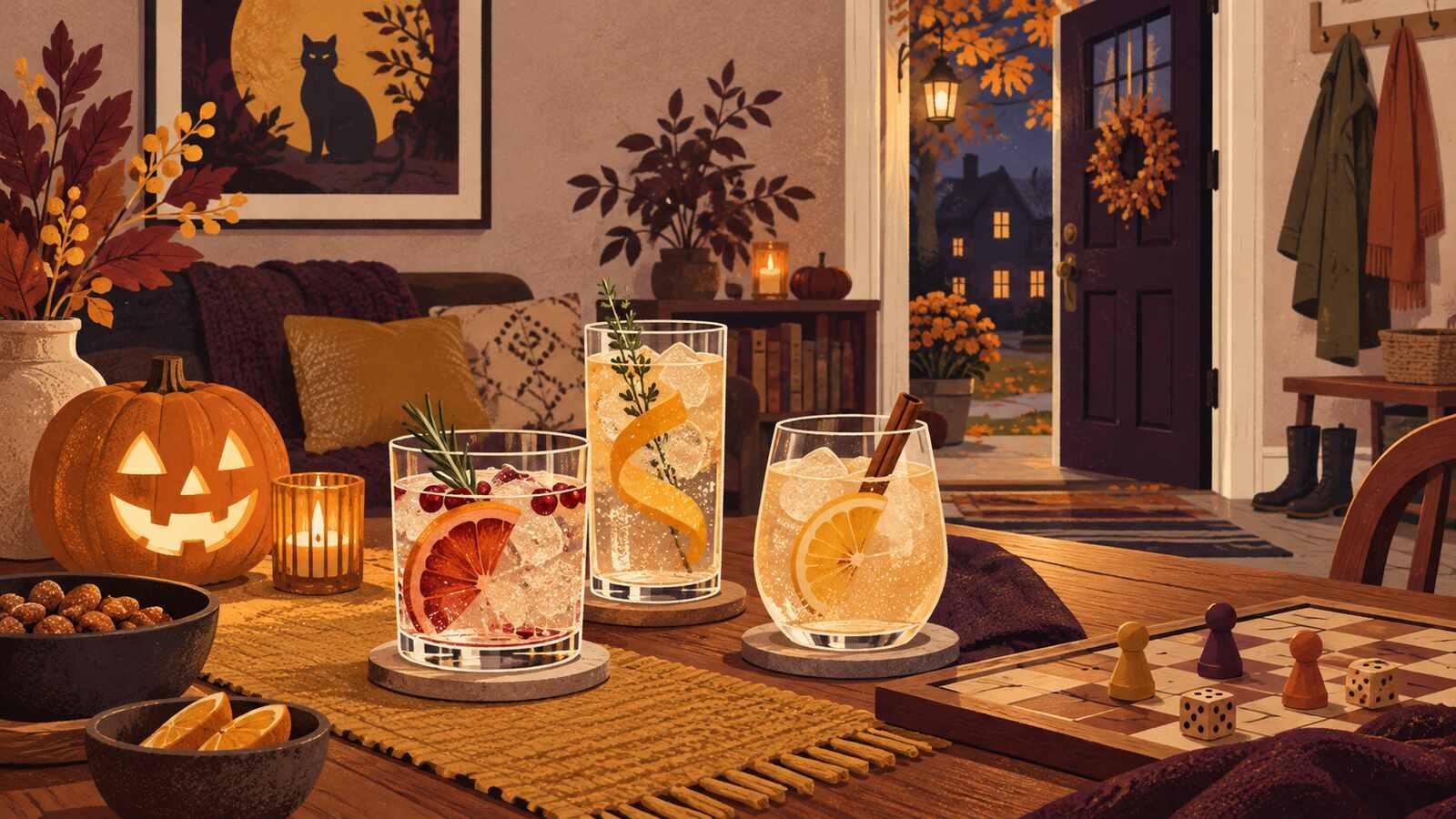
Halloween gives you an unusually clear choice: host something, go out, join one small activity, or stay home. The costume and decorations are optional. The drink is optional too. If you want an alcohol-free night, decide what you will actually do between dinner and bedtime before the invitations start arriving.
In 2026, Halloween falls on Saturday, October 31. That makes it the last evening of Sober October for anyone doing the month-long challenge. This guide is about the evening itself: a usable schedule, a host checklist, and a guest plan. You do not have to turn the night into a test of willpower or a statement about anyone else's drinks.
Pick the kind of night you want
Start with three questions. How much social energy do you have? Do you want to host, travel, or go nowhere? What time would you like the night to finish? A plan that answers those questions is more useful than a list of twenty-four activities.
If you want a lively evening, host a short costume gathering with one activity everyone can join. If you want to go out, choose a venue with something to do besides stand near a bar: a screening, a haunted walk, a concert, or a friend's dinner. If you want a quieter night, invite one person for a film and food, or take the evening entirely for yourself. None of these is a lesser Halloween.
You can also split the night. Join the first hour of a party, then go home for a film. Visit a neighborhood event before a late dinner. Host a two-hour gathering and let guests continue elsewhere. A definite ending often makes it easier to say yes to the part you actually want.
A Halloween party plan you can use as a host
The strongest alcohol-free party has a shape. Guests know when to arrive, what is happening, and when the main event ends. They do not need a complicated program, but an empty room and a vague invitation leave the evening's direction to chance.
Here is one example for a small adult gathering. Move the times to suit your group.
| Time | What happens | What to prepare |
|---|---|---|
| 6:30 p.m. | Guests arrive, find food and choose a drink | Put cups, ice, water, and two clear alcohol-free options in sight |
| 7:00 p.m. | First activity: costume vote or short photo challenge | Give everyone a way to join without performing |
| 7:45 p.m. | Shared food and conversation | Serve food that can be eaten while people move around |
| 8:30 p.m. | Main activity: film, game, quiz, or themed playlist | Choose one, and have the equipment ready before guests arrive |
| 10:00 p.m. | Dessert and a natural ending | Say when the planned part ends in the invitation |
The schedule is a template, not a rule. Its useful feature is the transition from arrival to an activity to a finish. A costume vote can be silly and low pressure: funniest improvised costume, best handmade detail, or best group idea. A photo challenge can ask for three specific pictures, such as "best shadow," "strangest prop," and "most dramatic doorway." A film works best if people actually want to watch it; if your group likes to talk, pick a game instead.
Write the invitation plainly: "Costumes optional. Food and alcohol-free drinks from 6:30. Short costume game at 7, film at 8:30, planned finish around 10." If you do not want alcohol brought to your home, add "Please don't bring alcohol" before the event, rather than negotiating at the door. Guests can decide whether that format works for them.
Host checklist for the day before
- Choose one main activity and confirm the film, game pieces, sound, or seating work.
- Buy drinks you and your guests will enjoy. Water should be easy to find. Add one option that is tart or bitter and one that is sweet or familiar. Check labels if your own alcohol rule excludes trace alcohol.
- Prepare food before guests arrive where possible. Put a substantial option out early so nobody waits until late for dinner.
- Tell guests about costumes, arrival time, finish time, and the alcohol policy in the invitation.
- Set up a place for coats and a clear route to the bathroom. These details matter more than another decoration.
- Decide who will help you clean up, or make cleanup small enough to handle alone.
You do not need to imitate a bar menu. Citrus, cold tea, soda water, tonic, and fruit give you several combinations without a row of specialized bottles. If you want more ideas, our guide to non-alcoholic drinks explains how to build a drink that tastes considered. Check the actual ingredients of premixed drinks or bitters when avoiding even small amounts of alcohol.
Going to someone else's party: the guest plan
A guest has less control over the room, so make the controllable pieces concrete. Ask the host what kind of evening it is and whether food or alcohol-free drinks will be available. If the answer is unclear, eat beforehand and bring a drink you like when that is welcome. Choose transport that lets you leave on your own schedule. Save the address and the route home before you go.
Set a small objective other than "stay until the end." You might see the costumes, talk to two friends, play the first game, or stay through the film. Then you can decide again. A defined purpose keeps the evening from turning into hours of waiting for it to become enjoyable.
If someone offers you a drink, a short answer is enough: "I'm good with this" or "No thanks, I'll have soda." You do not owe a history, a diagnosis, or a promise about the future. If you want a more detailed social plan, the holiday guide covers recurring gatherings and conversations.
Make the exit practical. Know where your coat is, keep your phone charged, and decide on a time when you will check whether you still want to be there. Tell one person goodbye, thank the host, and leave. You do not have to wait for a dramatic reason. "Thanks for having me. I'm heading out" is a complete sentence.
Guest checklist before leaving home
- Confirm the address, start time, and how you will get home.
- Eat something and choose your first drink in advance.
- Decide what you want from the event and the earliest time you would comfortably leave.
- If you are meeting a friend, agree on whether you are leaving together or separately.
- Keep one quieter alternative available, such as a film at home, if the party is not the night you hoped for.
This is a logistics plan, not a claim that every party will be difficult. Many will be easy. A little preparation simply means you can enjoy the evening without making every decision in a noisy room.
Activities that give the evening a point
Choose activities by the people attending, not by a generic Halloween list. A room of close friends may enjoy a horror film with running commentary. A mixed group may do better with a short costume or photo game. If children are present, trick-or-treating or a pumpkin activity can be the event, with adults sharing the work of timing, food, and getting home.
For a low-cost home gathering, ask each guest to bring a small object that can be used as a prop, then build a ridiculous mystery story around the objects. For a quieter pair, choose two films in advance, one scary and one light, and decide after the first. For a group that wants to move, plan a walk past decorated streets with a fixed meeting point and finish. Check local opening hours and accessibility before inviting others to a venue.
The best activity is one you would still enjoy if nobody commented on your drink. That is a good test of whether the plan actually belongs to you. A themed glass can be fun, but it should not have to carry the whole night.
If you are finishing Sober October
Halloween can coincide with the end of a month-long alcohol break, but you do not need to decide your entire November during a party. Finish the evening according to the rule you chose for October. On November 1, look at what you learned and choose whether to continue, extend the break, or set a different rule. The Sober October guide has a fuller month-end review.
If a day counter helps you keep a private record, Sober Tracker can show your alcohol-free days and milestones without turning the party into a public announcement. One note about what worked tonight is enough. You can decide the next step tomorrow.
Frequently Asked Questions
Do I have to host an entirely alcohol-free party?
No. You can choose an alcohol-free home, attend a party where others drink, or organize a short activity somewhere else. If you host and do not want alcohol brought in, tell guests clearly in the invitation. The rule should be easy to understand before anyone arrives.
What if my friends want to go to a bar after the main event?
You can join them, leave, or suggest a different second stop. Decide based on what you want from the night and how you feel then. Hosting the first part does not obligate you to follow every later plan.
What can I say when someone asks why I am not drinking?
"I don't feel like it tonight" or "I'm having this instead" is enough. If Sober October is your reason and you want to say so, say it. You can also keep the reason private.
Is leaving early a failed Halloween?
No. A good evening can be two hours long. Put the main activity early enough that guests who leave at ten have attended the event, and let anyone who wants a later night make a separate plan.
Want a quiet record of the nights you chose to stay alcohol-free? Sober Tracker keeps your day count and milestones private while you get on with the rest of the evening.