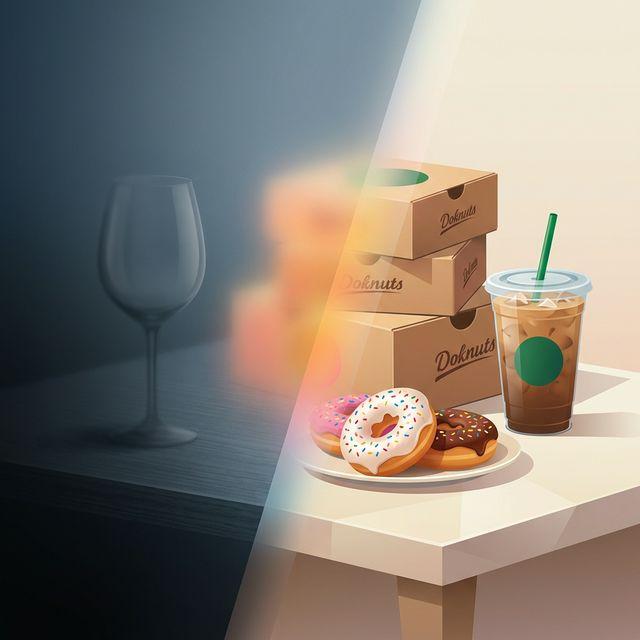
You did one of the hardest things a person can do. You stopped drinking. Somewhere in the back of your mind there was a quiet promise that the body would reward you for it, that the bloat would melt off and you would finally look the way you felt you should. So it is a special kind of cruel when you step on the scale a few weeks in and the number has gone the wrong way. Up. After all of that.
If this is you, the first thing to know is that you are not doing it wrong, and you are not alone. Weight gain in early sobriety is common enough that it has quietly derailed people who were doing everything right. It is also, for most people, temporary and entirely fixable once you understand what is actually happening. The scale going up is not a sign that sobriety failed. It is a sign that your body is recalibrating, and a few predictable habits filled the space the alcohol left behind.
Wait, Isn't Quitting Supposed to Make You Lose Weight?
It often does, eventually. Alcohol is dense with empty calories, and removing a nightly bottle of wine or a six-pack can erase hundreds of calories a day. That is the math behind our breakdown of how much weight people typically lose after quitting, and for plenty of people the loss does arrive.
But that calorie math only works if nothing else changes. In practice, almost everything else changes. Your appetite comes back, your gut starts absorbing food properly again, your brain goes hunting for the reward it used to get from drinking, and the evening ritual that used to involve a glass now involves a spoon. The calories you stopped drinking can quietly reappear on a plate, and sometimes more of them than before. Quitting drinking removes one source of calories. It does not automatically remove the craving for the feeling those calories delivered.
A free sobriety tracker app makes progress like this much easier to see, and our comparison guide breaks down which ones do it best.
Where the Weight Actually Comes From
The single biggest driver is sugar. When you stop drinking, your brain loses a reliable hit of dopamine and a steady supply of fast-burning sugar, and it looks for the nearest replacement. That replacement is almost always something sweet. This is why so many newly sober people find themselves eating ice cream at 10 PM after a lifetime of barely touching dessert, a pattern we unpack in detail in our guide to why sugar cravings spike after quitting alcohol. The cravings are real, chemical, and temporary, but while they last they can add a surprising number of calories to your day.
The second driver is your appetite and digestion coming back online. Alcohol irritates the stomach, blunts hunger signals in some people, and damages the gut lining so that nutrients pass through without being fully absorbed. As your gut heals, you start absorbing more of what you eat, and your hunger hormones normalize. The result can feel paradoxical: you are healthier, your body is working better, and that better-working body is now efficiently holding onto calories it used to waste. For some heavier drinkers, alcohol had also been replacing meals entirely, and simply eating like a normal person again represents a real increase in food.
Then there is the ritual. Drinking is rarely just about the alcohol. It is the thing you did at six o'clock to mark the end of the day, the reward, the wind-down, the comfort. When you take the glass away but leave the craving for comfort untouched, food slides neatly into the empty slot. A snack becomes the new pour. This is one branch of a larger pattern we call the cross-addiction trap, where the brain swaps alcohol for sugar, caffeine, or other quick rewards, and food is the most common substitute of all.
Finally, movement quietly drops. Early sobriety can come with fatigue, low mood, and disrupted sleep, and a tired person moves less without noticing. Fewer steps, more time on the couch, and a lower baseline of daily activity all chip away at the calorie deficit you assumed quitting would hand you for free.
Why You Should Not Panic About It
Here is the part worth sitting with: a few pounds gained in early sobriety is a small price, and it is almost always reversible. The sugar cravings that drive most of it are at their fiercest in the first few weeks and fade substantially over one to three months as your dopamine system rewires and your blood sugar stabilizes. As the cravings ease, the late-night sweets lose their grip, and the weight that crept on tends to come back off without a dramatic intervention.
It also helps to remember what is happening underneath the number on the scale. Your liver is healing, your blood pressure is easing, your sleep is deepening, and your skin is clearing, the kind of full-body repair we map out in our look at how the body heals month by month after you quit. None of that shows up on a bathroom scale, and all of it matters more than a temporary three or four pounds. The worst thing you can do is let an early weight gain convince you that sobriety is not working, because that story is how people talk themselves back into a drink. The drinking was never the healthy choice. Staying sober and adjusting a few habits is.
How to Stop the Gain Without Risking Your Sobriety
The goal in early sobriety is to gently steer the weight without turning it into a second battle that competes with the first. Protect the streak above everything, and layer in food changes that work with your recovering brain rather than against it.
Start by feeding the craving instead of fighting it bare-handed. The sweet tooth is largely a blood-sugar and dopamine problem, so the fix is to keep your blood sugar steady. Build your meals around protein and fiber, which blunt the crashes that trigger the 10 PM hunt for sugar, and keep genuinely satisfying options within reach so that when the craving hits, you are not choosing between a binge and white-knuckling it. Fruit, Greek yogurt, dark chocolate, and a warm drink can take the edge off a craving for a fraction of the calories of what you would otherwise reach for.
Replace the ritual rather than just deleting it. The six o'clock urge is going to arrive whether or not you have a plan for it, so give it somewhere to go. A proper non-alcoholic drink, a pot of tea, a walk, anything that fills the wind-down slot will reduce how often food gets drafted into the role. Hydration matters here too, because thirst is easy to mistake for hunger, and a body recovering from years of alcohol's dehydration is often genuinely short on water.
Move, but kindly. You do not need a punishing fitness regimen in month one, and crash dieting while your brain is already managing withdrawal and cravings is a recipe for relapse. A daily walk, some light strength work, and a gradual return of normal activity will rebuild the movement that fatigue stole, and the energy itself will start to return as your body repairs, a process we cover in our piece on why early sobriety can leave you tired despite doing everything right.
Above all, give it time and sequence it correctly. Sobriety first, body composition second. Let the cravings burn down, let your sleep and energy come back, and let your eating settle into a new normal before you start optimizing. Most people find that the early gain stabilizes and then reverses on its own once the dust settles, and the ones who lose weight sustainably are the ones who stayed sober long enough to get there.
A simple way to keep your focus on the thing that actually matters is to measure your progress in days, not pounds. Sober Tracker is a private, no-account counter that turns your streak into a number you can watch grow, which keeps the win in front of you on exactly the weeks when the scale is being unhelpful and your motivation is fragile.
Conclusion
Gaining a few pounds after quitting alcohol is one of the most common and least talked about parts of early sobriety, and it catches good people off guard. It happens because your brain swaps alcohol for sugar, your gut starts absorbing food properly again, the evening ritual gets handed to a snack, and a tired body moves less. Every one of those is a behavior, not a verdict, which means every one of them can be adjusted. Steady your blood sugar, replace the ritual, move gently, and be patient, and the early gain tends to fade as the cravings do. The number on the scale is the least important thing that quitting drinking is doing for you right now. Keep the streak, and your body will catch up.
The scale measures one thing. Your sobriety is fixing everything else. Do not trade the second for the first.
Frequently Asked Questions
Why am I gaining weight after quitting alcohol instead of losing it?
Usually because the calories you stopped drinking have been replaced, and then some. Quitting alcohol triggers strong sugar cravings as your brain looks for a new source of dopamine and fast energy, your healing gut starts absorbing more of the food you eat, and the evening drinking ritual often gets replaced by snacking. Early sobriety fatigue can also reduce how much you move. The weight gain is behavioral and hormonal, not a sign that quitting was the wrong choice.
Is weight gain after quitting drinking permanent?
For most people, no. The sugar cravings that drive the majority of early weight gain are strongest in the first few weeks and fade significantly over one to three months as your dopamine system rewires and your blood sugar stabilizes. As the cravings ease and your eating settles, the early gain typically levels off and then reverses, especially if you steady your blood sugar with protein and fiber and rebuild gentle daily movement.
How much weight do people usually gain in early sobriety?
It varies, but most people who gain weight see a few pounds rather than a dramatic increase, driven mainly by increased sugar and snack intake. Some heavier drinkers who had been skipping meals in favor of alcohol see a larger shift simply from eating normally again. The amount is far less important than the trend over time, which usually turns favorable once cravings fade and habits adjust.
Should I diet to lose the weight while I am newly sober?
Be cautious about strict dieting in the first weeks. Your brain is already managing withdrawal, cravings, and mood swings, and adding the stress of severe restriction can put your sobriety at risk. A better approach is to protect your streak first, stabilize your blood sugar with balanced meals, replace the drinking ritual with something non-food where you can, and add light movement. Once your cravings and energy have settled, you can focus more directly on body composition.
Will the sugar cravings that make me gain weight ever go away?
Yes. The intense sweet cravings of early sobriety are a temporary feature of a brain adjusting to life without alcohol's dopamine hits, and they fade substantially for most people within one to three months. Eating protein and fiber, staying hydrated, and not letting your blood sugar crash all shorten and soften them in the meantime.
Want to keep the focus on the win that actually matters? Sober Tracker is a private, no-account counter for staying alcohol-free, turning your streak into a number you can watch grow even on the weeks the scale is not cooperating.
This article is educational and not a substitute for medical advice. If you drink heavily or daily, do not stop abruptly without guidance, as sudden withdrawal from heavy long-term drinking can be dangerous and should be medically supervised. Talk to a healthcare professional about significant or unexplained weight changes.