[!IMPORTANT] Medical Disclaimer: We are sober trackers sharing experiences, not medical professionals. If you have a severe physical dependence on alcohol or highly sensitive triggers, consult an addiction specialist before introducing non-alcoholic substitutes into your routine.
The non-alcoholic (NA) beverage market is currently exploding. From craft zero-proof IPAs to alcohol-free gin substitutes, it has never been easier to find a drink that looks and tastes exactly like the real thing, minus the ethanol.
For many people quitting drinking, this feels like a cheat code. You can still hold a cold beer at a barbecue, participate in toasts, and enjoy the taste of hops after a long day of work. But within the recovery community, the debate over NA beer is fierce and deeply divided.
Some consider it a lifesaver; others view it as a dangerous slip-n-slide straight back to relapse.
So, does non-alcoholic beer help or hurt your sobriety? Let's break down the science, the psychology, and the pros and cons.
For a label-by-label choice, see whether kombucha contains alcohol, including hard kombucha and home batches.
The Pros: Why NA Beer Can Be a Lifesaver
For many individuals, specifically those in the "sober curious" camp or those who drank out of habit rather than deep physical addiction, NA beer can be an incredibly useful tool.
1. It Replaces the Habit Loop, Not Just the Drink
Habits are comprised of a cue, a routine, and a reward. If your cue is "finishing work at 5 PM," the routine was "crack open a beer," and the reward was "relaxation."
NA beer allows you to keep the cue and the routine intact. Bizarrely, the brain often registers the physical act of opening a can, hearing the "tssst," and tasting the familiar flavor as the reward itself. This is known as a placebo effect, and it can genuinely induce feelings of relaxation without a drop of alcohol.
2. Social Camouflage
One of the hardest parts of early sobriety is dealing with the constant barrage of questions: "Why aren't you drinking? Are you sick? Are you pregnant?"
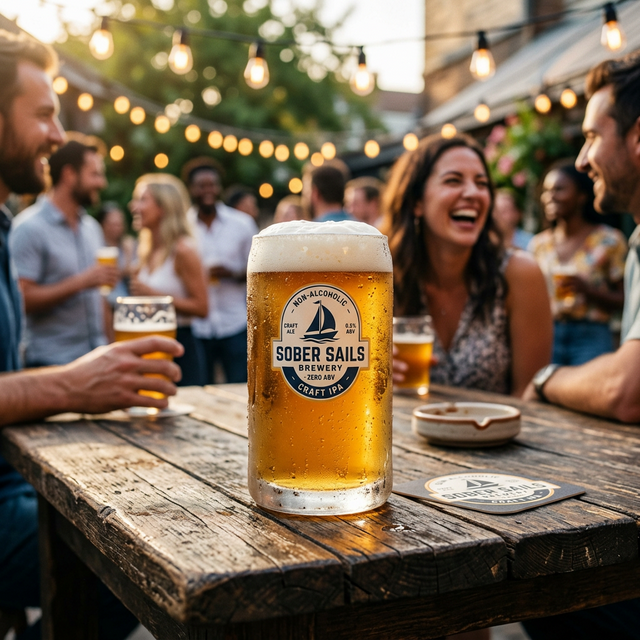
Holding a premium NA craft beer in a koozie makes you invisible at parties. It stops the interrogations before they start, allowing you to socialize comfortably without feeling isolated or pressured to explain your life choices to someone who has had five margaritas.
3. It Stops the "Sugar Grab"
When you stop drinking, your body instantly misses the massive influx of liquid sugar and empty calories it was used to receiving. This is why many newly sober people find themselves demolishing pints of ice cream at 10 PM. NA beer provides a complex, bitter, and savory flavor profile that can satisfyingly break a sugar craving.
If you're still choosing a tracking app, our guide to the best sobriety apps compares the top options side by side.
The Cons: The Hidden Risks of "Near Beer"
While the benefits are real, the dangers are equally valid. For some, the closeness to the real thing is exactly the problem.
1. The "Phantom Buzz" and Euphoric Recall
Because NA beer tastes, smells, and looks identical to real beer, it can trigger euphoric recall—a state where your brain remembers the intense pleasure of past drinking while completely ignoring the negative consequences.
Some people experience a "phantom buzz" after drinking an NA beer. Your brain expects the dopamine rush of alcohol based on the sensory input. When the alcohol never arrives, it can leave you feeling agitated, restless, and intensely craving the real thing to finish the chemical cascade that the NA beer started.
2. It Keeps the Obsession Alive
If you are white-knuckling your sobriety by drinking six NA beers a night while staring longingly at the wall, you haven't really changed your relationship with the act of drinking.
True recovery often involves entirely rewiring how you cope with stress, boredom, and socialization. Constantly mimicking your old drinking behavior can sometimes prevent you from developing new, healthier coping mechanisms.
3. Trace Amounts of Alcohol
By law, a beverage can be labeled "non-alcoholic" in many regions if it contains up to 0.5% Alcohol By Volume (ABV). While it is virtually impossible to get drunk off 0.5% beer (your body metabolizes the alcohol faster than you can drink it), this trace amount can be highly problematic for someone with severe physiological addiction or those taking certain medications like Antabuse (Disulfiram).
The Verdict: Know Your Triggers
There is no universal "right" answer to whether NA beer is good or bad for sobriety. It is highly dependent on your personal history, your triggers, and your current state of mind.
NA Beer might be right for you if:
- You drank mostly out of habit or social conformity.
- You don't feel intense, overwhelming cravings when tasting it.
- It genuinely helps you navigate social settings without stress.
You should avoid NA Beer if:
- The taste or smell makes you obsess over buying real alcohol.
- You find yourself chugging them rapidly, trying to chase a feeling.
- You have a severe history of addiction where even sensory triggers lead to relapse.
Track Your Progress
If you decide to incorporate NA drinks into your routine, pay close attention to how they affect your mood and cravings. Use the journal feature in Sober Tracker to log your feelings after trying an NA beer. If you notice a spike in anxiety or cravings the next day, it might be a sign to stick to sparkling water and lime.
Sobriety is about radical honesty with yourself. If a tool helps keep you sober today, use it. If it threatens your peace, dump it down the drain.