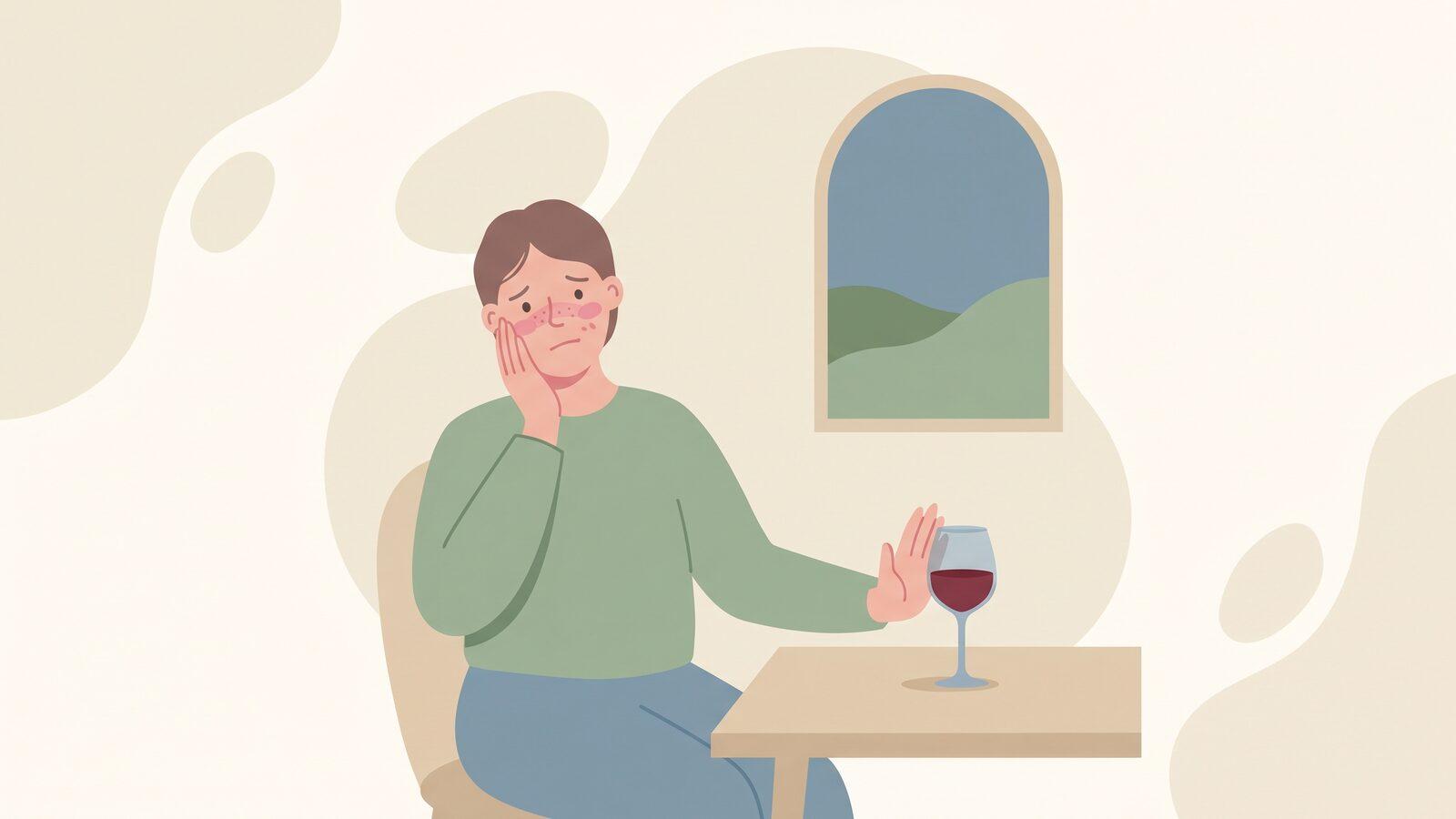
There is a particular unfairness to it. You finally stop drinking, the one change that is supposed to make you feel better, and instead you spend day two with your head in a vice. No wine last night, no beer, nothing, and yet the pounding behind your eyes feels worse than any hangover. It is enough to make you wonder whether your body is protesting the decision itself.
It is not. Headaches are one of the most common early withdrawal symptoms, and they show up precisely because you quit, not because quitting is bad for you. They are the sound of a brain and a set of blood vessels recalibrating after months or years of daily chemical interference. This article walks through why the headaches happen, the typical day-by-day timeline, the handful of things that genuinely help, and the specific warning signs that mean you should involve a doctor.
Why Your Head Hurts When You Stop Drinking
Alcohol is a depressant that slows the central nervous system. Drink regularly and your brain compensates by running its excitatory systems hotter, leaning on the accelerator to cancel out a brake that is always pressed. Take the alcohol away and the brake vanishes while the accelerator stays floored. This rebound state, which doctors call autonomic hyperactivity, is the same engine behind withdrawal sweats, tremors, and the racing heart many people notice in the first days. In your head it shows up as pain, because several of its effects converge there at once.
First, blood vessels. Alcohol dilates them, and your body has spent a long time counteracting that. In early withdrawal the vessels in and around your skull swing between constriction and dilation as the system searches for its new baseline, and those swings are a classic headache trigger, the same mechanism behind many migraines.
Second, stress chemistry. The rebound floods you with cortisol and adrenaline, which tighten the muscles of the scalp, jaw, and neck. That produces the band-of-pressure tension headache that so many people describe in week one, often paired with a clenched jaw they only notice at night.
Third, the mundane amplifiers. Early sobriety usually arrives with dehydration, depleted electrolytes like magnesium and potassium, erratic blood sugar as sugar cravings spike, broken sleep, and often a sharp change in caffeine habits, whether that is doubling your coffee to cope or dropping the espresso martinis that used to supply it. Every one of those is a headache trigger in its own right. Stack them on top of a nervous system in overdrive and a pounding head is close to inevitable.
Not sure which app to use? We compared the top sobriety apps to make choosing easier.
The Typical Headache Timeline
Withdrawal headaches follow a reasonably predictable arc, though the intensity depends on how much and how long you drank.
The first 24 hours. For regular drinkers, a dull, persistent headache is often among the very first symptoms, beginning six to twelve hours after the last drink. It can feel confusingly like a hangover that arrived without the party.
Days 2 and 3. This is the peak window for withdrawal in general, and headaches usually crest here alongside the other symptoms covered in our day-by-day withdrawal timeline. The pain is commonly throbbing or pressure-like, worse with movement, screens, and bright light, and it often travels with anxiety, sweats, and poor sleep.
Days 4 to 7. For most people with a mild to moderate drinking history, the constant headache breaks up into shorter episodes, easier to trace to a specific trigger: a skipped meal, a bad night, too much coffee.
Weeks 2 to 4. The acute chemistry has largely settled, but many people still get more headaches than they will later, mostly tension-type, driven by the stress, restless sleep, and blood sugar swings of early sobriety rather than withdrawal itself. These fade as sleep deepens and routines stabilize.
If a headache pattern persists well past the first month, it usually is not withdrawal anymore. Sometimes quitting simply unmasks a headache condition that was always there, muffled by regular drinking, and that deserves its own diagnosis rather than being filed under recovery.
What Actually Helps
You cannot skip the recalibration, but you can stop feeding the headache its favorite fuel.
- Rehydrate properly, not heroically. Steady water through the day beats forcing liters at once, and electrolytes matter as much as volume. Magnesium in particular is commonly depleted by regular drinking and is linked to headache susceptibility. Our guide to hydration in early sobriety covers the practical details.
- Keep your blood sugar boring. Regular meals with protein and slow carbohydrates flatten the glucose spikes and crashes that trigger head pain, especially while your sweet tooth is raging.
- Hold your caffeine steady. Now is not the moment to quit coffee too, and not the moment to triple it either. An abrupt caffeine change in either direction is one of the most reliable headache triggers there is. Keep your usual dose at your usual time, and adjust later once your head has settled.
- Protect sleep like it is medicine. Because it is. Sleep debt keeps cortisol high and pain thresholds low. Even the imperfect, restless sleep of the first weeks helps, and it improves faster than most people expect, as we cover in our guide to sleep problems after quitting.
- Use painkillers thoughtfully. An occasional over-the-counter dose is fine for most people, with two cautions. If you drank heavily for a long time, ask a doctor before using paracetamol (acetaminophen), which is processed by a liver that may still be recovering. And avoid taking any painkiller more than two or three days a week, because daily use can itself create a rebound headache cycle.
- Move gently and unclench. A walk, light stretching of the neck and shoulders, and consciously dropping your jaw during the day all take pressure off the tension-headache machinery. Save the intense workouts for after the peak window.
Counting Your Way Past the Pounding
The worst part of a withdrawal headache is not the pain, it is the doubt that rides along with it. Day three, head throbbing, and a quiet voice suggests that one drink would fix this in twenty minutes. It is not wrong, technically. It is also exactly how the cycle keeps itself alive.
What breaks the doubt is evidence, and the simplest evidence is a number that only moves one way. A private day counter like Sober Tracker gives you that: no account, no social feed, just your streak climbing while your head finishes recalibrating. A headache on day four reads very differently when it sits next to a counter proving you are four days into the window you knew would be hard, and almost through it.
When to See a Doctor
Most withdrawal headaches are miserable but harmless. A few patterns are not, and they deserve immediate attention:
- A sudden, explosive headache, the worst of your life, reaching full intensity within seconds or minutes. This is an emergency regardless of withdrawal.
- Headache with confusion, hallucinations, fever, or severe shaking, which can signal delirium tremens, a medical emergency of severe withdrawal.
- A seizure, or any history of withdrawal seizures.
- Headache with vision changes, weakness or numbness on one side, slurred speech, or a stiff neck.
- A headache following any fall or head knock, even one that seemed minor at the time.
- Persistent daily headaches beyond the first weeks, which are worth diagnosing properly rather than enduring.
One more caveat belongs here: if you drank heavily every day for a long time, do not quit cold turkey without medical guidance. Severe withdrawal is dangerous, and a supervised taper or medication makes the whole process safer and considerably more comfortable.
Conclusion
Headaches after quitting alcohol are the price of a nervous system and a vascular system finding their way back to factory settings: rebounding stress chemistry, blood vessels hunting for a baseline, and a pile of amplifiers, dehydration, sugar swings, caffeine shifts, bad sleep, all landing in the same week. For most people they peak around day two or three, loosen their grip within a week, and taper to occasional tension headaches that fade as sleep and routine return.
And on the other side of that window sits a genuinely better deal: no more hangover headaches, ever, steadier hydration, deeper sleep, and a clearer head as the brain fog lifts. The pounding is temporary. What it is building is not.
A headache in early sobriety is not your body protesting the decision. It is your body undoing the workaround it built for the drinking, one throb at a time.
Frequently Asked Questions
How long do headaches last after quitting alcohol?
For most regular drinkers, headaches begin within six to twelve hours of the last drink, peak around days two and three alongside other withdrawal symptoms, and ease substantially within five to seven days. Occasional tension-type headaches can continue for a few weeks, driven by stress, poor sleep, and blood sugar swings rather than withdrawal itself. A headache pattern that persists daily beyond the first month deserves a proper medical look rather than being attributed to recovery.
Why do I have a headache days after I stopped drinking?
Regular drinking forces your brain to run its excitatory systems hotter to counteract alcohol's sedative effect. When you stop, that overdrive rebounds with nothing to balance it, flooding you with stress hormones and swinging your blood vessels between constriction and dilation, both classic headache mechanisms. Dehydration, depleted magnesium, erratic blood sugar, caffeine changes, and broken sleep, all common in the first weeks, each add their own trigger on top.
What helps a headache from alcohol withdrawal?
Steady hydration with electrolytes, regular meals to keep blood sugar level, an unchanged caffeine routine, protected sleep, and gentle movement to release neck and jaw tension all reduce the load. Occasional over-the-counter painkillers are fine for most people, but long-term heavy drinkers should ask a doctor before using paracetamol because of the liver, and nobody should use painkillers more than two or three days a week, which can create rebound headaches.
Are headaches a dangerous withdrawal symptom?
On their own, no. Withdrawal headaches are unpleasant but harmless for most people and fade as the nervous system rebalances. Seek urgent care if a headache is sudden and explosive, or comes with confusion, fever, hallucinations, seizures, one-sided weakness, vision changes, slurred speech, or a stiff neck. Long-term heavy daily drinkers should involve a doctor before quitting, because severe withdrawal can escalate and is safest managed with supervision.
Will quitting alcohol reduce my headaches long term?
Almost certainly. Alcohol is a well-documented headache and migraine trigger, both directly and through the dehydration and poor sleep that follow drinking. Once past the withdrawal window, most people get fewer headaches than they did while drinking, starting with the permanent end of hangover headaches. If frequent headaches continue after the first month sober, that pattern predates the quitting more often than it is caused by it, and a doctor can help find the real trigger.
A pounding head in the first week is temporary, and watching the days add up makes it easier to ride out. Sober Tracker is a private, no-account day counter that turns each hard day into visible progress, so you can see exactly how far you have come while your body finishes recalibrating.
This article is educational and not a substitute for medical advice. Alcohol withdrawal can be serious, especially for long-term heavy drinkers. If you experience a sudden severe headache, confusion, hallucinations, fever, seizures, one-sided weakness, vision changes, or a stiff neck, seek medical care immediately, and talk to a doctor before quitting if you drink heavily every day.