The fall happens in the kitchen, on a Tuesday, on flat tile, with no ice and no rug. A 67-year-old woman catches her hip on the corner of the counter and goes down. Six weeks later she is in rehab with a titanium rod in her femur, and the orthopedist says the same thing he says to almost every woman her age: "Your bones were already weak. The fall just found out."
What the orthopedist usually does not say, because it would not change the treatment plan, is that the bone loss probably started thirty years earlier. And that one of the steady, invisible accelerants was the nightly glass of wine she had been told was good for her heart.
Bone health is the part of the alcohol conversation almost nobody hears about until something breaks. By then, decades of slow erosion have already happened, and most of the damage is much harder to reverse than people assume.
Here is what alcohol actually does to the skeleton, who is most exposed, and what recovery looks like when you stop.
Bones Are Not Static. They Are Constantly Being Torn Down and Rebuilt
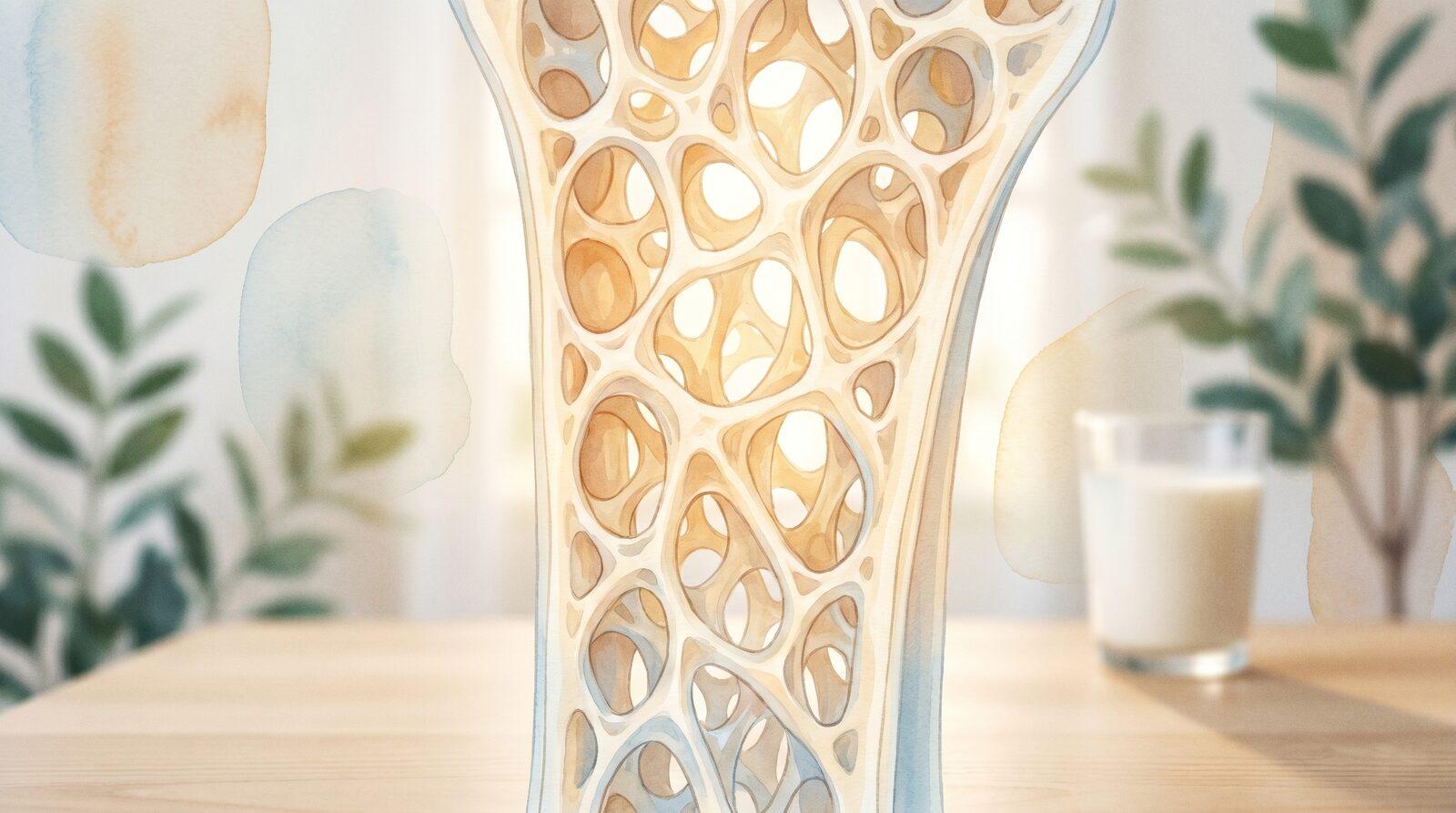
The most common misconception about bone is that it is finished growing in your twenties and just slowly weakens after that. The reality is that bone is a living tissue in constant turnover. Two cell types do the work:
- Osteoblasts build new bone
- Osteoclasts break down old bone
In a healthy adult, the two are roughly balanced through your thirties, and then osteoclast activity starts gradually outpacing osteoblast activity. By your fifties, you lose bone faster than you build it. By menopause (for women) or your sixties (for men), the gap widens sharply.
Alcohol disrupts both sides of this equation, which is what makes it unusually destructive to bone over time. It is not just that drinking damages bones once. It is that drinking shifts the long-term balance, year after year, in the wrong direction.
A free sobriety tracker app makes progress like this much easier to see, and our comparison guide breaks down which ones do it best.
The Five Mechanisms That Make Alcohol a Bone Wrecker
1. It directly suppresses osteoblast activity
Alcohol is toxic to the cells that build new bone. Even moderate, regular drinking measurably reduces osteoblast proliferation and bone formation markers in human studies. The bone you should be laying down in your thirties and forties simply does not get laid down at the same rate.
This is the single most important mechanism, because it operates at every age and every dose. There is no "safe enough" level of alcohol that fully spares osteoblast activity, although the suppression is dose-dependent.
2. It impairs calcium absorption
Calcium is the structural mineral of bone, and alcohol interferes with its absorption in two ways: it irritates the gut lining that uptakes calcium, and it disrupts the parathyroid hormone signalling that regulates calcium balance. People who drink regularly absorb less of the calcium they eat, and their bodies leach more from the skeleton to maintain blood calcium levels.
The result is a quiet calcium debt that the bones pay for over decades.
3. It depletes vitamin D, magnesium, and vitamin K2
Vitamin D is required for calcium absorption. Magnesium activates vitamin D and is itself a structural component of bone. Vitamin K2 directs calcium into bone rather than into soft tissue (like arteries).
Alcohol depletes all three:
- It impairs the liver enzymes that convert vitamin D to its active form
- It increases urinary magnesium excretion
- It disrupts the gut bacteria that produce vitamin K2
A regular drinker on a "normal" diet is often functionally deficient in the entire bone-mineralization stack, even with no obvious symptoms.
4. It reduces sex hormones that protect bone
Estrogen in women and testosterone in men are powerful brakes on bone resorption. They suppress osteoclast activity and keep the rebuild-versus-breakdown ratio favorable.
Alcohol lowers both. In women, it can accelerate the hormonal shifts of perimenopause and menopause, exactly when bone loss is already speeding up. In men, regular drinking reliably suppresses testosterone and removes the same protective effect.
The double hit (alcohol weakening bone directly, plus alcohol weakening the hormones that protect bone) is why heavy drinkers can lose bone density at two to three times the expected age-related rate.
5. It raises cortisol
Chronic alcohol use elevates cortisol, the body's main stress hormone. Cortisol is catabolic to bone: it suppresses osteoblasts and stimulates osteoclasts, the exact opposite of what bones need.
This is why people on long-term steroid medications (which mimic cortisol) get such severe osteoporosis. Alcohol works through a milder version of the same mechanism, every day, for years.
Who Is Most at Risk
Bone vulnerability to alcohol is not evenly distributed. Five groups carry far more risk than the average drinker:
Postmenopausal women. Estrogen has already crashed, osteoclasts are already running hot, and adding alcohol piles on top of an already steep loss curve. This is the single highest-risk group, and the one where damage progresses fastest.
Men over 50, especially with low testosterone. Andropause is slower and quieter than menopause, but it follows a similar trajectory. Men with declining testosterone who drink regularly often arrive at osteoporosis a decade later than women, but they arrive there.
Anyone with a family history of osteoporosis. Bone density is roughly 60 to 80 percent heritable. If your mother or father fractured a hip, you start with less margin to lose.
People who drank heavily in their teens and twenties. Peak bone mass is built between ages 18 and 30. Heavy drinking in this window can leave a person with a permanently lower ceiling, regardless of how much they cut back later.
Anyone with a malabsorption condition. Celiac disease, IBD, gastric bypass, or even chronic acid suppression (PPIs) compounds with alcohol's effect on calcium and vitamin D, often catastrophically.
If you are in two or more of these categories and you drink regularly, the case for cutting back stops being theoretical and starts being a numbers game with your seventies.
The Fracture Risk Is the Headline Risk
The clinical concern with osteoporosis is not really "low scores on a DEXA scan." It is fractures, and specifically the kind that change the rest of a person's life: hip, spine, and wrist.
The numbers are sobering. In adults over 50, drinking three or more units of alcohol per day raises the risk of any osteoporotic fracture by roughly 30 to 40 percent compared to non-drinkers. For hip fractures specifically (which carry a one-year mortality rate around 20 to 30 percent in older adults), the risk increases more steeply still.
Alcohol also raises fracture risk through a separate, blunt mechanism: people fall more often when they have been drinking. A meaningful share of "osteoporotic" hip fractures in older adults are actually alcohol-related falls onto bones that were also weakened by alcohol over the preceding decades.
What Actually Recovers When You Stop
The honest answer: a fair amount, but not everything, and the timeline is slower than most other organs.
Within weeks, the acute mechanisms shut down. Cortisol normalizes, calcium absorption improves, magnesium and vitamin K2 levels start climbing, and osteoblast suppression lifts. The active poisoning of bone tissue stops.
Within three to six months, bone formation markers in blood (P1NP, osteocalcin) measurably rise. The skeleton is genuinely rebuilding faster than it was when you were drinking.
Within one to two years, modest gains in bone mineral density (BMD) appear on DEXA scans for many people, particularly younger adults and those whose bone loss was driven mostly by alcohol rather than by aging or hormones.
Beyond two years, the picture becomes more individual. People in their thirties and forties who quit drinking often see substantial recovery, sometimes returning close to age-expected baselines. People in their sixties and seventies see the rate of loss slow dramatically (which is itself a major win) but rarely regain large amounts of lost density.
The framing matters: stopping drinking does not "reverse osteoporosis" the way stopping smoking can reverse some cardiovascular damage. What it does is stop one of the most controllable accelerants and let the body's own remodelling machinery do its job under normal conditions.
For most people, the practical effect of quitting at any age is a slower decline curve and meaningfully fewer fractures over the rest of life. That is not a small benefit. That is the difference between aging into independence and aging into a hip fracture.
The Recovery Stack: What Actually Helps
Quitting drinking is the single biggest lever. After that, four things move bone density measurably:
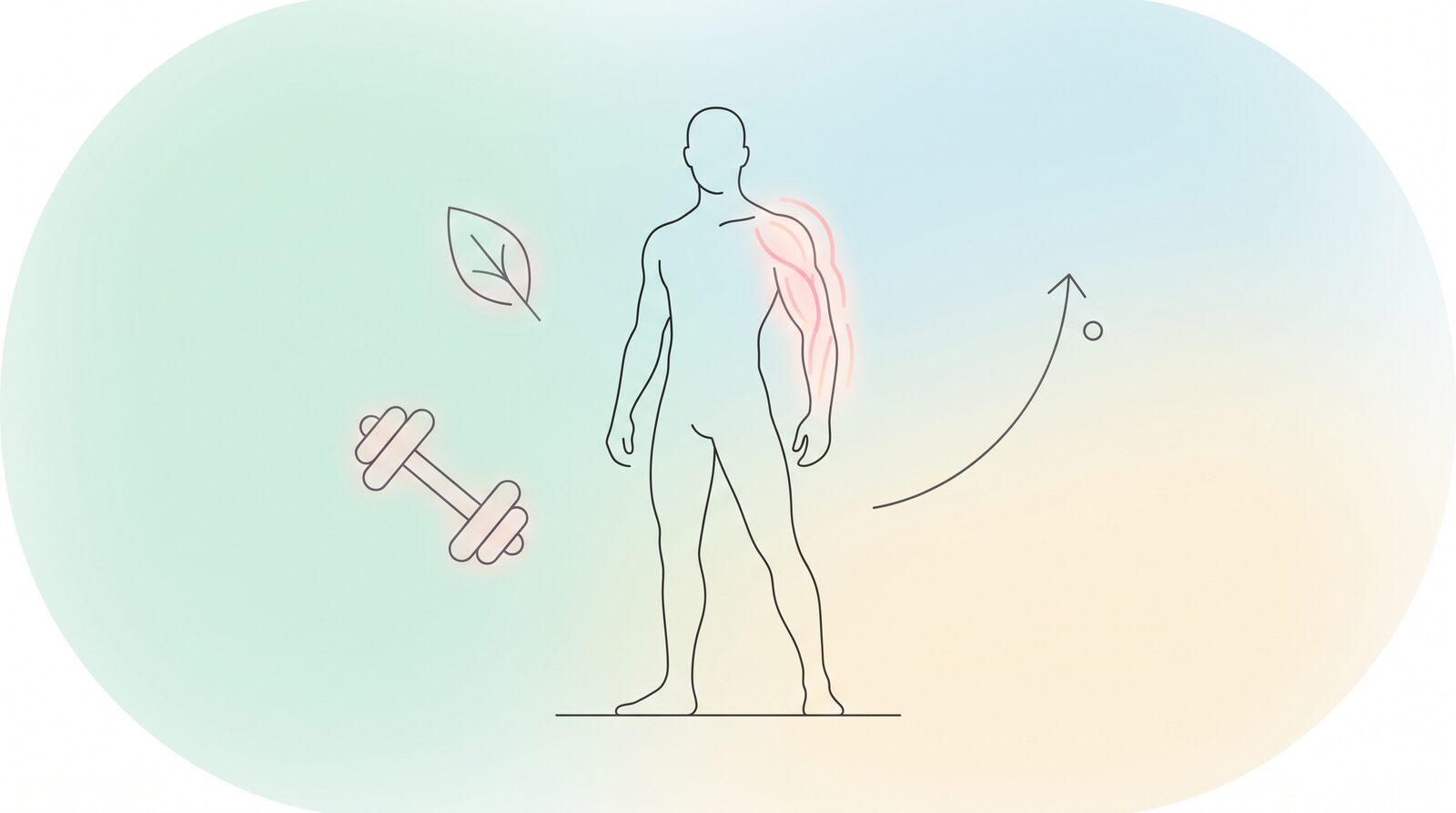
Weight-bearing and resistance exercise. Bone responds to load. Walking, hiking, dancing, jumping, and especially heavy resistance training (squats, deadlifts, hip hinges) all signal osteoblasts to build. Two to three resistance sessions per week is the strongest non-pharmacologic intervention available, and it stacks cleanly with sobriety.
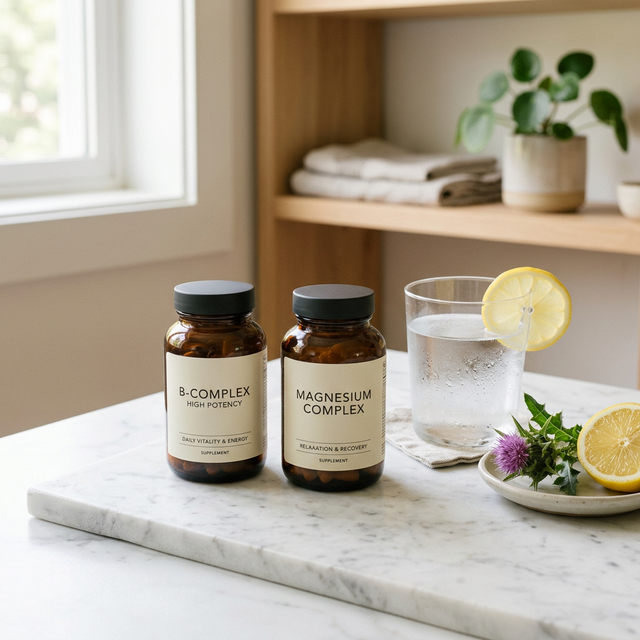
Adequate calcium and vitamin D. Most adults need roughly 1,000 to 1,200 mg of calcium per day from food first, then supplements if needed, and 1,000 to 2,000 IU of vitamin D3 daily (more if blood levels are low). Specific supplement strategies for the recovery period tend to layer in magnesium glycinate and vitamin K2 (MK-7 form) to round out the bone-mineralization stack.
Protein. Bone is roughly half mineral, half collagen. Adults rebuilding bone need 1.2 to 1.6 grams of protein per kilogram of body weight per day. Older adults consistently undereat protein, and it shows up in bone scans.
A baseline DEXA scan. If you are over 50, postmenopausal, or have other risk factors, getting a current DEXA scan and rechecking it every two to three years gives you actual data on whether your interventions are working. The scan itself does nothing, but the feedback loop drives behavior in a way that hoping does not.
For people interested in the wider physiology of recovery, the hormonal recovery timeline after quitting alcohol overlaps significantly with the bone-density story, since both are driven by sex hormones, cortisol, and growth factors that recalibrate together.
A Quiet Note About "Moderate Drinking and Bones"
You may have read studies suggesting that one drink per day is associated with slightly higher bone density. They exist. They are also confounded: light drinkers in observational studies tend to be wealthier, more active, and better-fed than non-drinkers, who often include people who quit drinking due to health problems.
When the analysis is corrected for those factors, the apparent benefit shrinks toward zero, and at any consumption above one drink per day, bone density consistently declines.
The honest read of the evidence is that no level of alcohol intake provides meaningful net benefit to the skeleton, and most levels are mildly to severely harmful over time. If "I drink for my bones" is the framing, the evidence stopped supporting it years ago.
Why This Matters Earlier Than You Think
The trap with bone health is that it is silent until it isn't. Unlike the liver (which throws warning signs in blood tests), or the heart (which produces symptoms when it is in trouble), bones simply quietly thin for thirty or forty years and then break.
By the time someone in their sixties realizes their skeleton is in trouble, the decisions that mattered most were the ones made in their thirties, forties, and fifties. The drinks they did or did not have. The lifting they did or did not do. The vitamin D they did or did not check.
This is one of the reasons many people start tracking their alcohol-free days well before they consider themselves "in recovery." The bone-density math runs on cumulative exposure. Every alcohol-free year in your forties and fifties measurably lowers your fracture risk in your seventies. The streak is not symbolic. It is structural.
The Honest Conclusion
Alcohol does not just make a single bad night happen. It is also one of the slowest, quietest forms of bone damage available, and it is almost entirely under your control.
If you are in your twenties or thirties, your peak bone mass is being built right now, and what you do this decade sets the ceiling for the rest of your life. If you are in your forties or fifties, the rate of loss is the variable that matters most, and alcohol is the easiest accelerant to remove. If you are postmenopausal or older, stopping drinking will not undo what is already gone, but it will substantially flatten the curve from here forward, and it will lower your fracture risk in a way that few other single interventions can match.
The fall in the kitchen on a Tuesday is the part nobody plans for. The thirty years of decisions that led to it are. Your bones are paying attention. They have been all along.
Want to see what happens to your body, including your bones, when you take a meaningful break from alcohol? Sober Tracker is a private, no-account streak counter built for exactly this kind of long-game experiment. Pair it with a baseline DEXA scan and check back in two years.
This article is educational and not a substitute for medical advice. If you have concerns about bone density, fracture risk, or your drinking, talk with a healthcare provider.