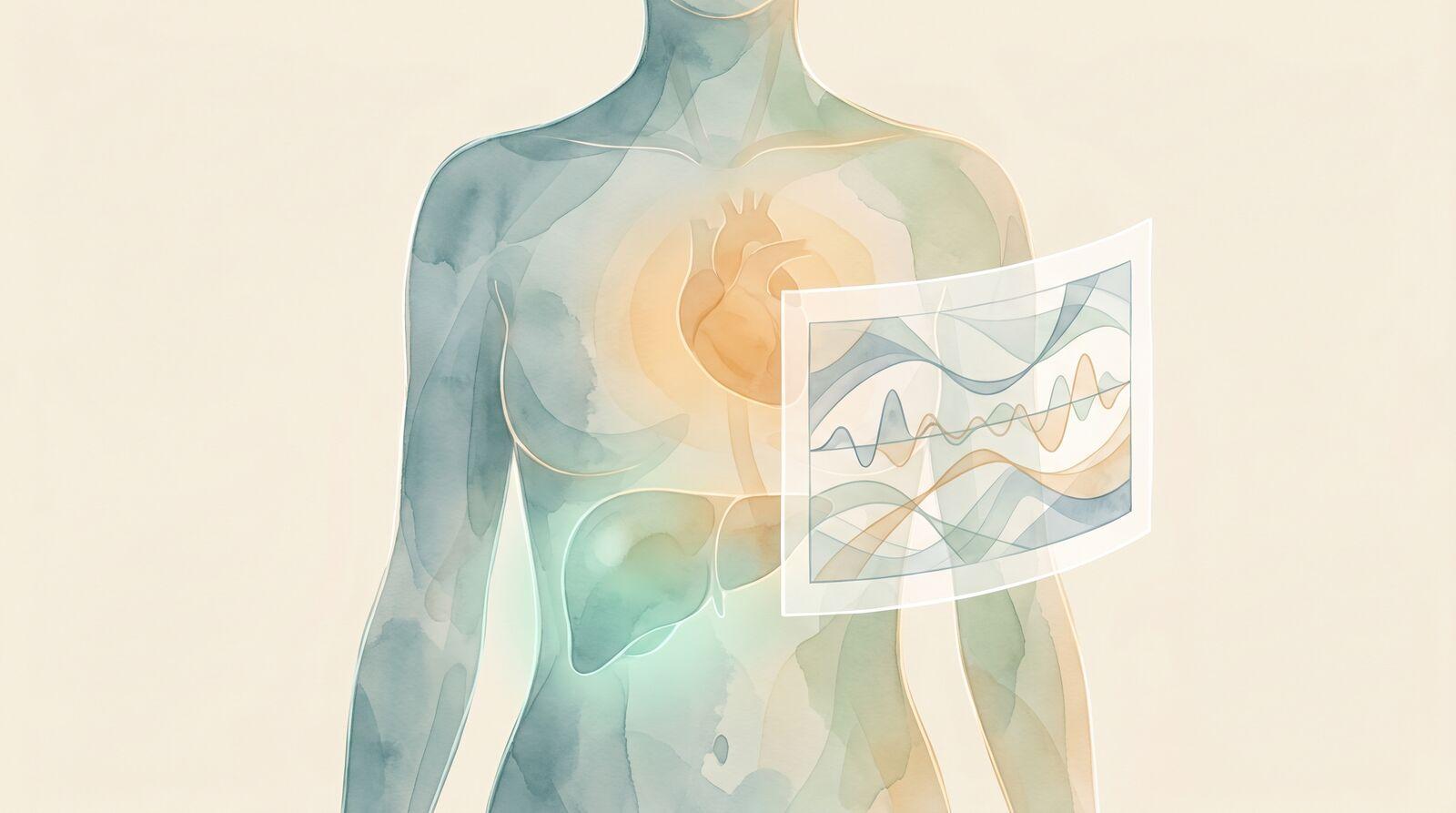
The lab summary lands with a number that was not there last year. Fasting glucose 109. A1C 5.8 percent. The portal flags it in orange: "Prediabetes range. Lifestyle modification recommended. Recheck in 6 months." The advice underneath is the usual script: lose some weight, cut refined carbs, walk more, watch the sugar.
What the note never mentions is the four or five drinks a week. The wine with dinner, the beers on the weekend, the cocktails that come with eating out. Alcohol does not show up on a glucose panel as its own line item, so it almost never gets named in the conversation about a creeping A1C. The standard framing treats blood sugar as a carbohydrate problem and a body-weight problem, and alcohol slips through as a social habit unrelated to the number on the page.
It is not unrelated. Alcohol is one of the more disruptive things a regular drinker can do to glucose regulation, and it works through several mechanisms at once: an acute crash, a chronic build of insulin resistance, a hidden calorie and sugar load, and a sleep hit that feeds straight back into the metabolic loop. Here is what alcohol actually does to your blood sugar, why it rarely gets flagged, and what the recovery curve looks like once you stop.
What Blood Sugar Actually Is (And Why Your Liver Runs It)
Blood glucose is the amount of sugar circulating in your bloodstream at any moment, kept inside a narrow band by a tight feedback loop. Eat carbohydrate, glucose rises, the pancreas releases insulin, cells take the sugar up, and the level drops back. Go a few hours without eating and the level would fall too low, except the liver steps in and releases stored glucose to hold the line.
That last part is the key to understanding alcohol. Between meals and overnight, your blood sugar is not held up by what you ate. It is held up by the liver quietly releasing glucose on a schedule, a process called gluconeogenesis. The liver is the organ that prevents you from crashing while you sleep.
Alcohol is also cleared almost entirely by the liver, and the liver treats it as a priority. When there is alcohol in the blood, the liver drops most other jobs to metabolize it first, including the steady release of glucose. This single fact explains the strangest part of the alcohol and blood sugar story: drinking can send glucose down hard in the short term while pushing it up over the long term. Same organ, two different timelines.
A standard workup looks at three numbers:
- Fasting glucose: a single snapshot, useful but noisy
- A1C (HbA1c): a three-month average of blood sugar, the more honest number
- Fasting insulin: rarely ordered, but the earliest signal of insulin resistance
The conventional story treats high numbers as a diet-and-weight problem. Modern metabolic medicine has filled in the insulin-resistance picture underneath it, and alcohol shows up at the center of that picture in ways the fasting glucose alone does not reveal.
If you're still choosing a tracking app, our guide to the best sobriety apps compares the top options side by side.
How Alcohol Actually Moves Your Blood Sugar
The hypoglycemia trap: the acute crash
The most counterintuitive effect comes first. While your liver is busy clearing alcohol, it is not releasing its scheduled glucose. If you have been drinking and have not eaten much, or you drink and then sleep, blood sugar can fall well below normal in the hours afterward. This is alcohol-induced hypoglycemia, and it is the mechanism behind a lot of 3 a.m. wake-ups, cold sweats, shakiness, and the ravenous hunger that drives the post-drinking carb binge.
For most people this is uncomfortable but self-correcting. For anyone on insulin or sulfonylureas for diabetes, it is genuinely dangerous, because those medications push glucose down and alcohol blocks the liver's only rescue mechanism at the same time. The two effects stack, and the crash can be severe and delayed by many hours.
The insulin resistance build: the chronic drift
Over weeks and months, regular drinking pushes the other direction. Alcohol and its metabolites promote inflammation, interfere with insulin signaling in muscle and liver tissue, and add visceral fat around the abdomen, the fat depot most tightly linked to insulin resistance. The result is that cells respond less to insulin, the pancreas compensates by producing more of it, fasting insulin rises first, and eventually fasting glucose and A1C drift up too.
This is the slow part of the story, and the part that ends up in the orange flag on the lab portal. By the time fasting glucose reads 109, insulin resistance has usually been building quietly for a year or more, and alcohol has often been one of its steadier contributors.
The hidden sugar and calorie load
Then there is the simplest mechanism, the one people resist most. Many drinks are sugar delivery systems. Beer carries fast carbohydrate. Sweet wine, cider, and almost every cocktail and mixer carry direct sugar. Even "dry" drinks come with roughly seven calories per gram of alcohol, calories the liver processes preferentially, parking other fuel as fat while it does. The same hepatic pathway alcohol runs through is the one that converts excess sugar into triglycerides, which is why the cholesterol and triglyceride picture moves in lockstep with the glucose picture.
The post-drinking food choices compound it. Alcohol lowers inhibition and the hypoglycemia rebound creates real hunger, so the late-night meal after drinking tends to be the largest and most carbohydrate-heavy of the day, landing on a metabolism already disrupted.
The Hangover Glucose Rollercoaster
The morning after heavy drinking is a metabolic mess that has very little to do with the carbs at breakfast. Overnight, the liver was clearing alcohol instead of regulating glucose, so many people wake low, shaky, and intensely hungry. They eat fast carbohydrate to fix it, glucose overshoots, insulin spikes, and a few hours later it crashes again. The "hangover" energy crash that gets blamed on dehydration is, for many people, a blood sugar rollercoaster they cannot feel the shape of.
This is also why people describe steadier energy within days of stopping. Removing the nightly alcohol clearance job lets the liver go back to holding glucose flat overnight, and the morning crash and the mid-afternoon dip both soften. It is one of the first things people notice, and it is purely a glucose effect.
The J-Curve Myth, One More Time
For years, observational studies suggested that moderate drinkers had a slightly lower risk of type 2 diabetes than teetotalers, the familiar J-shaped curve. It became another line in the "a little is good for you" story. The same critique that dismantled the cardiovascular J-curve applies here. The non-drinker comparison group was contaminated with "sick quitters," people who had stopped drinking because of existing health problems, which made moderate drinkers look healthier by comparison than they were.
When studies separate lifelong non-drinkers from former drinkers and adjust honestly for confounders, the protective signal mostly disappears, and at anything above light intake the risk of insulin resistance and type 2 diabetes rises with the dose. The current honest read is that alcohol is not a tool for blood sugar control at any dose. The cleaner your alcohol intake, the cleaner the glucose math.
Who Should Pay Closest Attention
People with prediabetes. This is the group most likely to be told to "watch the carbs" while alcohol goes unmentioned. Cutting drinking is one of the highest-leverage and least-discussed moves available for pulling an A1C back out of the prediabetic range, and it often works faster than the dietary changes that get all the attention.
People with type 2 diabetes. Alcohol both raises chronic insulin resistance and risks acute lows, an unstable combination on top of medication. Reducing or eliminating drinking usually tightens glucose control and lowers the dosing complexity.
Anyone on insulin or sulfonylureas. This is a safety issue, not just an optimization one. Alcohol blocks the liver's glucose rescue exactly when these medications are pushing glucose down. Delayed, severe hypoglycemia is a real risk, and it can arrive hours after the last drink.
People with PCOS or metabolic syndrome. Insulin resistance sits at the center of both. Alcohol's contribution is additive on top of an already strained system, and removing it is one of the cleaner ways to improve insulin sensitivity. The full metabolic syndrome cluster has alcohol woven through nearly every component, from triglycerides to blood pressure to waistline.
People with reactive hypoglycemia. The crash-and-spike pattern is amplified by alcohol. For people who already feel shaky a few hours after meals, drinking turns the volume up on a problem they already have.
Anyone on a GLP-1 medication. Alcohol works against the same appetite and glucose pathways these drugs target, blunts the metabolic benefit, and the empty calories quietly offset progress that is otherwise being paid for at real expense.
The Recovery Timeline When You Stop Drinking
The encouraging part of the blood sugar story is how fast it moves. Glucose regulation is not a slow-fix endpoint like bone density. The liver and the insulin system respond in real time, and changing what the liver is asked to process changes the numbers quickly.
Within the first week. The overnight hypoglycemia trap disappears immediately. Morning energy steadies, the 3 a.m. wake-ups ease, and the post-drinking carb binges stop. Day-to-day glucose swings flatten almost at once, even though the lab average has not moved yet.
Within 2 to 4 weeks. Fasting insulin starts to fall as the inflammatory load drops and the liver stops being asked to clear alcohol nightly. Insulin sensitivity measurably improves in this window for most regular drinkers. Fasting glucose often begins to settle, though A1C still reflects the prior three months.
Within 4 to 8 weeks. Visceral fat begins to come down, especially as the alcohol calories disappear and post-drinking meals stop. The parallel weight loss curve feeds directly back into improving insulin sensitivity, and the two recoveries reinforce each other.
Within 3 to 6 months. A1C now reflects the alcohol-free period and typically moves down meaningfully. For people sitting in the prediabetic range, this is often the window where the number drops back below the threshold without any other dramatic intervention. Liver enzymes normalize alongside, and the liver recovery timeline tracks the same curve from the hepatic side.
Beyond 6 months. Glucose regulation settles into a new steady state that reflects diet, activity, body composition, and genetics, without the chronic alcohol-driven distortion sitting on top of it. For people with established type 2 diabetes there may be permanent insulin-producing capacity loss, but even then control is consistently easier and more stable off alcohol.
The Recovery Stack: What Actually Moves Glucose
After quitting, a handful of things move the glucose numbers measurably, in rough order of leverage.
Walk after meals. Ten minutes of walking after eating blunts the post-meal glucose spike more reliably than almost any other single habit. It works immediately and compounds over months.
Get the carbohydrate timing right, not just the amount. Pairing carbohydrate with protein, fat, and fiber flattens the glucose curve. Removing alcohol already removes the largest disinhibitor of bad food timing, so this gets easier on its own once drinking stops.
Protect sleep. Short or fragmented sleep raises insulin resistance the next day, independent of diet. Alcohol was wrecking sleep architecture, so quitting tends to improve glucose through the sleep channel as much as the liver channel.
Build a little muscle. Skeletal muscle is the largest glucose sink in the body. Two or three short resistance sessions a week increase the tissue that pulls sugar out of the blood, and the effect shows up on a glucose panel within weeks.
Get the right test, including fasting insulin. A fasting glucose plus A1C is standard. Adding a fasting insulin, or a HOMA-IR calculation, surfaces insulin resistance years before glucose does. If you have been a regular drinker and are over 35, this is one of the highest-information, lowest-cost tests in preventive medicine. Get a baseline at the start of an alcohol-free stretch and recheck the A1C at three months.
A Note on "Low-Carb" Alcohols Specifically
The popular workaround is to switch to spirits, dry wine, or hard seltzer on the theory that "no sugar" means "no blood sugar problem." It is half true and misses the bigger half. A neat spirit has almost no carbohydrate, so it will not spike glucose directly on the way in. But the alcohol itself still hijacks the liver, still blocks overnight glucose release, still drives the chronic insulin resistance build, still adds visceral fat through its calorie load, and still wrecks the sleep that regulates glucose the next day.
"Zero carb" addresses only the smallest of the four mechanisms. The drink that does not spike your glucose on the way in is still building insulin resistance on the way out. If the goal is metabolic health, the relevant variable is the ethanol, not the carbohydrate printed on the can.
The Honest Conclusion
Blood sugar is one of the clearest places to watch the "moderate drinking is fine" narrative come apart. Alcohol crashes glucose acutely and lifts it chronically. It builds insulin resistance through inflammation, visceral fat, and disrupted sleep, and it does most of this invisibly, because it never appears as its own number on the panel that gets flagged.
For anyone whose last lab showed a fasting glucose creeping up, an A1C in the prediabetic range, or a doctor circling a number with "we'll watch this," the cheapest experiment available is also the most informative. Stop drinking for 90 days. Recheck the A1C. Because the number is a three-month average, a 90-day alcohol-free stretch is almost perfectly designed to show up on it.
For most regular drinkers, the recovered glucose profile is meaningfully cleaner than the one they were carrying, and it is the foundation the rest of metabolic health is built on. This is one of the reasons many people who quit after a borderline A1C end up tracking alcohol-free days alongside their lab work. A 90-day streak paired with a baseline and recheck is one of the cleanest natural experiments in metabolic medicine. The number does the arguing.
Curious what your A1C looks like after a real break from alcohol? Sober Tracker is a private, no-account streak counter built for exactly this kind of long-game experiment. Pair it with a baseline lab and recheck in twelve weeks.
This article is educational and not a substitute for medical advice. If you have diabetes, prediabetes, or take any glucose-lowering medication, talk with a healthcare provider before changing your drinking, especially if you use insulin or sulfonylureas. Sudden withdrawal from heavy long-term drinking can be dangerous and should be medically supervised.