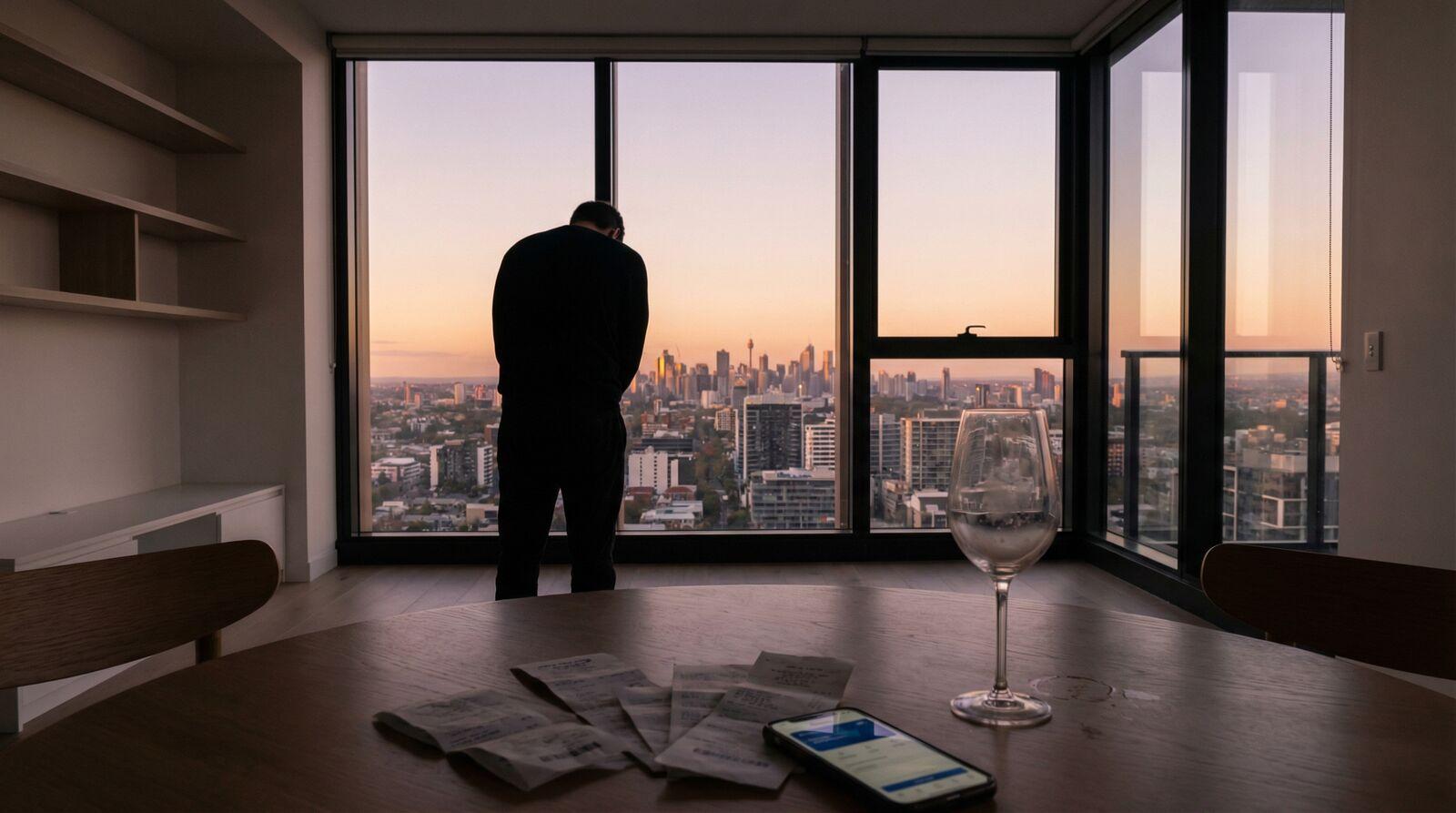
There was no rock bottom. That's the tricky part.
No DUI. No hospital visit. No intervention. No moment where I looked in the mirror and thought "this has to stop." It was just a slow slide that didn't feel like anything was wrong. And that's exactly why it worked so well for so long.
I was making good money. Going out regularly. Buying random stuff after a few drinks. Booking spontaneous trips with whoever was around. Picking up the tab because it felt generous and fun. "I deserve this," I told myself. And honestly? Everything felt fine.
Until I zoomed out.
For an estimate based on your own spending and start date, use the sobriety calculator.
The "I Deserve This" Trap
Here's how it works. You put in long hours at work. You deal with stress, deadlines, difficult people. By Friday, you feel like you've earned the right to blow off steam. A few drinks, a nice dinner, some online shopping at midnight because why not. You're making money, you're an adult, you deserve to enjoy it.
The problem is that "I deserve this" never has a limit. It applies to the Tuesday night beers because the day was rough. It applies to the weekend brunch with bottomless mimosas. It applies to the random Amazon order at 1am that seemed brilliant after four drinks. It applies to the spontaneous flight to somewhere with people you barely know because "life is short."
Each individual purchase felt justified. Each night out felt earned. Each impulse buy felt small. Nothing was ever a crisis. Nothing was ever the moment where it all went wrong.
That's because it wasn't one moment. It was thousands of small ones.
Not sure which app to use? We compared the top sobriety apps to make choosing easier.
The Spending Nobody Notices
Drunk spending doesn't announce itself. It doesn't feel reckless in the moment. It feels fun, generous, spontaneous. You're not gambling away your savings or buying a boat on credit. You're just:
- Picking up rounds at the bar because you're feeling good
- Ordering food delivery at midnight because drunk-you is always starving
- Buying that thing you saw online because it seemed like a great idea after a few glasses
- Saying yes to trips and plans you can't really afford because alcohol makes everything sound amazing
- Upgrading to the nicer hotel, the better seats, the VIP option because "why not, we're here"
- Taking Ubers everywhere because responsible drinking isn't cheap either
None of these feel like a problem. They feel like living. They feel like the reward you've earned for working hard. And because you're making decent money, the bank account absorbs it. There's always enough to cover rent. Always enough to keep going. You never bounce a check or miss a bill.
But you also never build anything.
The Zoom-Out Test
This is what finally got me. Not a crisis. Not an intervention. Just a simple, brutal question:
Where was I two years ago versus where am I now?
Two years of solid income. Two years of a good salary hitting my account every month. And what did I have to show for it? No savings. No investments. No emergency fund. No progress on any financial goal I'd ever set. Just a collection of bar receipts, half-remembered nights, random stuff I didn't need, and photos from trips where I was mostly drunk.
The math didn't add up. Not because I wasn't earning enough, but because everything I earned was being quietly consumed by a lifestyle built around drinking.
I tried to point to one moment where it went wrong. I couldn't. Because it never felt wrong. Not once. Not on any individual night. Not during any single purchase. It was only when I pulled back and looked at the full picture that the pattern became impossible to ignore.
Two years. Good income. Nothing to show for it. That's not a rock bottom. That's a slow drain. And it's almost worse because you can't even get angry at a specific decision. You can only get angry at all of them together.
Why It Never Feels Wrong
Alcohol is brilliant at keeping you in the present moment, and not in the mindful, zen way. It keeps you focused on right now: this drink, this night, this feeling. It collapses your time horizon to the immediate.
When you're three drinks in, "I should be saving for retirement" is not a thought that occurs to you. What occurs to you is that another round sounds great, that jacket online looks perfect, and this random trip to Vegas with coworkers will be legendary.
There's also the social reinforcement. Everyone around you is doing the same thing. Your drinking friends are spending the same way. Going out is just what people do. Spending money on nights out is just part of life. Nobody in that circle is going to tap you on the shoulder and say "hey, you've spent $800 this weekend on nothing meaningful."
And because you're high-functioning, because the bills get paid and the job gets done, there's no external alarm. No one is worried. No one is staging an intervention. The system keeps running. It just doesn't build anything.
The Invisible Compound Effect
Here's what really stings when you do the math. It's not just the money you spent. It's the money that money could have become.
If I'd put even half of my drunk-spending into an index fund for those two years, I'd have had a real cushion. A safety net. Options. Instead, I had a closet full of stuff I bought at midnight and a phone full of photos from nights I half-remember.
The financial freedom that comes with sobriety isn't just about saving what you would have spent on drinks. It's about breaking the entire spending pattern that drinking creates. The drunk purchases, the hangover comfort spending, the "treat yourself" cycle that alcohol fuels at every turn.
Drinking didn't just cost me the price of the drinks. It cost me everything that came with them, and everything I could have built instead.
What Actually Changed
For me, it wasn't a dramatic pledge or a life-changing event. It was that zoom-out moment. Looking at two years of decent income and realizing I was essentially in the same financial position as when I started. Maybe worse, because I was two years older with nothing accumulated.
I didn't need a rock bottom to make the decision. I just needed to be honest with myself about the gap between what I was earning and what I had. That gap had one explanation, and it wasn't bad luck or a high cost of living. It was alcohol and everything that orbited around it.
The first few months sober, the most shocking thing wasn't how I felt physically or mentally. It was watching my bank account actually grow. Money just... stayed there. Because I wasn't bleeding it out every weekend on drinks, drunk food, impulse purchases, and spontaneous plans that sounded amazing at 11pm on a Friday.
If This Sounds Familiar
If your drinking doesn't feel like a problem, I get it. Mine didn't either. Not for years. But maybe try the zoom-out test. Look at where you were financially two years ago. Look at what you've earned since then. Look at what you have now.
If those numbers don't make sense, if there's a gap you can't explain with rent and groceries and normal life expenses, you might be in the same slow slide I was in. Not a dramatic fall. Not a rock bottom. Just a quiet, steady drain that's easy to miss when you're inside it.
You don't need to lose everything to realize something is off. Sometimes you just need to notice that you're not building anything despite having every opportunity to.
That's what did it for me. And honestly, that was enough.
The most dangerous financial drain isn't the one that ruins you overnight. It's the one that takes just enough that you never notice, year after year, until you look up and wonder where it all went.
No rock bottom. No dramatic wake-up call. Just a quiet look at the numbers and the uncomfortable truth they told. Sometimes that's all it takes.