Het eerste wat de meeste mensen opmerken is het gat. Ze worden wakker op de bank met hun schoenen nog aan, de lichten nog fel, de hond nog op het bed, en de laatste veertig minuten van de avond zijn er simpelweg niet. Niet wazig, niet vaag, niet in de verkeerde volgorde door elkaar gehusseld. Weg. Alsof die minuten nooit zijn opgenomen.
En dat is precies wat er gebeurde. Ze zijn nooit opgenomen.
Een black-out is de luide, onmiskenbare versie van wat alcohol met je geheugen doet. Het is ook de versie die de meeste mensen afdoen als onbelangrijk, want de volgende ochtend gaat de rest van het leven gewoon verder en voelen de verdwenen minuten als een kleine prijs. De stillere versie is moeilijker op te merken en veel belangrijker: een langzame, dosisafhankelijke afbraak van geheugen en leervermogen over de jaren heen, en een meetbaar hoger risico op dementie in de decennia daarna.
Dit is wat alcohol werkelijk met je geheugen doet, waarom het hersengebied dat het zwaarst wordt geraakt nu juist het gebied is dat je je het minst kunt veroorloven te verliezen, en wat er herstelt als je stopt.
De twee storingen: encoderings-black-outs versus afbraak op lange termijn
Het geheugen kent onder invloed van alcohol twee manieren waarop het faalt, en dat zijn niet dezelfde problemen.
De eerste is een encoderingsstoring. Wanneer het alcoholgehalte in het bloed snel oploopt, vooral boven ongeveer 0,16 procent, stopt de hippocampus met het wegschrijven van nieuwe langetermijnherinneringen. Het kortetermijngeheugen werkt nog steeds, dus iemand kan een gesprek voeren, autorijden, naar huis lopen, berichten sturen. Maar de ervaring van moment tot moment wordt nooit overgebracht naar de opslag. Uren later bestaan die gebeurtenissen niet als herinneringen, omdat ze nooit zijn geëncodeerd. Er valt niets op te halen, geen vervaagde kopie, geen verward fragment. Alleen lege band.
Dit is de reden waarom mensen tijdens een black-out verbluffend complex gedrag kunnen vertonen en zich daar niets van herinneren. Het systeem dat je laat functioneren in het moment is intact. Het systeem dat je het moment laat onthouden ligt eruit.
De tweede is een langzame, cumulatieve afbraak. Deze treedt op bij veel lagere doses, elke week dat je drinkt, decennialang. Regelmatige blootstelling aan alcohol, zelfs op de niveaus die volksgezondheidsinstanties vroeger "matig" noemden, laat de hippocampus geleidelijk krimpen, dempt zijn elektrische signalering en vermindert het vermogen van de hersenen om nieuwe herinneringen vast te leggen en te consolideren. Er is geen dramatisch gat, alleen een gestage rem op het soort geheugen waarmee je talen leert, namen onthoudt, afspraken vasthoudt en je herinnert wat iemand gisteren zei.
De black-outs zijn het zichtbare deel. De afbraak is het deel dat uiteindelijk op een hersenscan verschijnt als je in de zestig bent.
Nog op zoek naar een app? We hebben de beste apps om te stoppen met drinken uitgebreid vergeleken.
De hippocampus onder invloed van alcohol
De hippocampus is een kleine, zeepaardvormige structuur diep in elke slaapkwab. Het is de geheugenmotor van de hersenen: het deel dat beslist wat er wordt opgeslagen, gebeurtenissen aan hun context koppelt en nieuwe informatie verbindt met wat je al weet. Hij is ook ongewoon kwetsbaar voor alcohol, om drie redenen.
Ten eerste legt alcohol het kenmerkende elektrische patroon van de hippocampus lam. Geheugenvorming is afhankelijk van een proces dat langetermijnpotentiatie (LTP) heet, waarbij herhaald vuren de verbindingen tussen neuronen versterkt. Alcohol onderdrukt LTP rechtstreeks in de hippocampus. De cellen worden niet langer gevoeliger voor elkaar, en de chemische registratie van "dit is zojuist gebeurd" wordt nooit weggeschreven. Zodra het alcoholgehalte in het bloed een drempel overschrijdt, stopt het encoderen abrupt.
Ten tweede doodt alcohol neuronen in de hippocampus sneller dan in de rest van de hersenen. Hersenscanstudies bij regelmatige drinkers laten consequent een volumeverlies van de hippocampus zien dat niet in verhouding staat tot enig ander hersengebied. Zelfs mensen die zichzelf als matige drinkers beschouwen, zonder een diagnosticeerbare alcoholstoornis, vertonen een meetbare krimp van de hippocampus vergeleken met niet-drinkers, en wel op een dosisafhankelijke lijn.
Ten derde blokkeert alcohol de geboorte van nieuwe neuronen in de hippocampus. De hippocampus is een van de weinige hersengebieden die ook op volwassen leeftijd nieuwe neuronen blijft aanmaken, een proces dat neurogenese heet. De geboorte van nieuwe neuronen is een deel van hoe je geheugen en leervermogen scherp blijven. Alcohol onderdrukt neurogenese sterk, en zelfs bescheiden wekelijkse inname verlaagt het tempo meetbaar.
De hippocampus doet drie taken tegelijk: encoderen wat er nu gebeurt, consolideren wat er recent is gebeurd, en zijn eigen celpopulatie aanvullen. Alcohol verstoort alle drie. Er is geen andere hersenstructuur die door drinken zo'n vergelijkbare drievoudige klap krijgt, en dat is de reden waarom geheugeneffecten eerder en betrouwbaarder opduiken dan vrijwel elk ander cognitief symptoom.
Voor een vollediger beeld van hoe de rest van de hersenen herstelt zodra je stopt, loopt de cognitieve comeback na stoppen met drinken de rest van het herstellandschap door, van de dikte van de prefrontale cortex tot het uitvoerend functioneren. De hippocampus is een van de trager herstellende onderdelen, maar hij zit niet vast.
Black-outs zijn niet zomaar "te veel gedronken". Het is een specifieke hersentoestand.
De meeste mensen gaan ervan uit dat black-outs alleen optreden bij heel hoge doses, het soort dat braken en bewusteloosheid veroorzaakt. De data zeggen iets anders. De drempel voor fragmentarisch geheugenverlies kan al worden bereikt bij een alcoholgehalte in het bloed rond de 0,14 tot 0,20 procent, wat een volwassene van zo'n 68 kilo kan halen met ongeveer vier tot zes glazen in twee uur. Volledige en-bloc black-outs (helemaal geen herinnering aan een langere periode) vereisen doorgaans hogere niveaus, maar ze zijn niet zo zeldzaam als mensen denken, vooral met shots, snel achter elkaar gedronken rondjes en drinken op een lege maag.
Een aantal dingen verhoogt het risico aanzienlijk:
- Snel drinken in plaats van verspreid over de uren
- Drinken op een lege maag
- Alcohol combineren met slaapmiddelen of benzodiazepinen (deze versterken de effecten van alcohol op de hippocampus sterk)
- Een genetische aanleg (sommige mensen krijgen een black-out bij veel lagere doses dan anderen, en familiegeschiedenis is een sterke voorspeller)
- Vrouw zijn (minder lichaamswater, snellere stijging van het alcoholgehalte, lagere drempel)
De klinische zorg rond black-outs gaat niet over de gêne de volgende ochtend. Het gaat over wat de black-out blootlegt: dat de dosis hoog genoeg was om een specifiek hersengebied uit te schakelen. De hippocampus is klein, kwetsbaar en centraal in geheugen en emotieregulatie. Herhaalde black-outs betekenen herhaalde chemische beschadigingen van precies die structuur, en het cumulatieve effect over de jaren is meetbaar op scans.
Als iemand af en toe een black-out heeft, is dat een signaal dat serieuze aandacht verdient. Als iemand routinematig een black-out heeft, is het structurele risico reëel en stijgend.
Van black-out tot hersenatrofie: hoe herhaalde blootstelling optelt
Langdurig, regelmatig alcoholgebruik levert een herkenbaar patroon op bij hersenscans: krimp van de hippocampus, verdunning van de prefrontale cortex, minder witte stof in de hersenbalk en vergrote hersenholtes. Het patroon is consistent genoeg dat ervaren radiologen vaak zwaar langdurig drinken op een MRI kunnen herkennen zonder dat ze het te horen krijgen.
Op dit spectrum liggen drie steeds ernstiger wordende uitkomsten.
Alcoholgerelateerde cognitieve achteruitgang. De vroegste en meest voorkomende uitkomst. Mensen merken dat ze trager zijn met namen, vaker dan vroeger de draad kwijtraken midden in een zin, moeite hebben om terug te halen wat er gisteren in een vergadering werd gezegd, en mentaal "softer" aanvoelen dan tien jaar geleden. Bij tests liggen het werkgeheugen en de verbale geheugenprestaties meetbaar onder de voor de leeftijd verwachte basislijn. Dit is nog geen diagnosticeerbare ziekte, maar het is wel de eerste zichtbare stap.
Alcoholgerelateerde hersenschade (ARBD). Een klinisch syndroom waarbij de cognitieve achteruitgang ernstig genoeg is om het dagelijks leven te verstoren. Mensen worstelen met plannen, organiseren en volgehouden aandacht. Geheugentekorten, vooral voor recente gebeurtenissen, worden moeilijk te compenseren. ARBD verschijnt doorgaans bij zware langdurige drinkers vanaf hun vijftiger jaren en daarna, maar het kan eerder optreden bij hogere blootstelling.
Het syndroom van Wernicke-Korsakoff. Het ernstige uiteinde. Veroorzaakt voornamelijk door een tekort aan thiamine (vitamine B1), dat alcohol aanjaagt via slechte opname, slechte voeding en een verhoogde metabolische vraag. De encefalopathie van Wernicke is de acute crisis (verwardheid, afwijkingen in de oogbewegingen, loopproblemen), en de psychose van Korsakoff is de chronische nasleep: diepgaand, vaak permanent geheugenverlies, met name het onvermogen om nieuwe langetermijnherinneringen te vormen. Patiënten kunnen op dat moment conversationeel normaal zijn en zich een uur later niets meer van het gesprek herinneren. Dit is een van de meest verwoestende cognitieve syndromen in de geneeskunde en is in wezen te voorkomen, omdat het wordt aangedreven door een vitaminetekort dat bovenop de alcoholtoxiciteit komt.
Het goede nieuws verscholen in dit grimmige spectrum is dat de vroegste stappen omkeerbaar zijn. Het harde nieuws is dat zonder onthouding de koers in de verkeerde richting blijft gaan.
Alcohol en het risico op dementie
Tot voor kort was de gangbare wijsheid dat "matig" drinken zou kunnen beschermen tegen dementie, gebaseerd op een handvol observationele studies die lieten zien dat lichte drinkers iets lagere percentages cognitieve achteruitgang hadden dan geheelonthouders. Dat beeld is het afgelopen decennium drastisch veranderd.
Het zuiverste huidige bewijs komt uit grote prospectieve cohortstudies en Mendeliaanse randomisatieanalyses (die genetische variatie gebruiken om een gerandomiseerd onderzoek na te bootsen en het grootste deel van de vertekening uit observationele data weghalen). Wanneer de analyse op die manier wordt gedaan, verdwijnt het schijnbaar beschermende effect van matig drinken, en komt een duidelijke dosisafhankelijke stijging van het dementierisico naar voren.
Grofweg:
- Regelmatige inname boven ongeveer 14 eenheden per week (ongeveer zeven standaardglazen in de VS) hangt samen met een meetbaar snellere cognitieve achteruitgang en een hoger dementierisico over follow-ups van vijftien jaar.
- Zwaar drinken (meer dan ongeveer 21 eenheden per week) verdrievoudigt ongeveer het risico op vroeg beginnende dementie (onder de 65 jaar) vergeleken met niet-drinkers.
- Een alcoholstoornis komt in sommige recente analyses naar voren als de grootste enkelvoudige te voorkomen risicofactor voor vroeg beginnende dementie, nog vóór tabak en hoofdletsel.
Verschillende mechanismen tellen op tot dat risico: krimp van de hippocampus en verminderde neurogenese, schade aan de witte stof die de neurale communicatie vertraagt, toegenomen ziekte van de kleine bloedvaten in de hersenen (wat het risico op vasculaire dementie verhoogt), thiaminetekort en verhoogde systemische ontsteking.
De insteek doet ertoe: alcohol is voor de meeste mensen niet de enige of zelfs de grootste risicofactor voor dementie. Genetica, cardiovasculaire gezondheid, slaap en hoofdletsel spelen allemaal hun rol. Maar alcohol is een van de meest beheersbare factoren, en de dosis-responscurve is reëel.
Wat herstelt er als je stopt, en op welke termijn
Dit is het deel waar de meeste mensen echt antwoord op willen. De eerlijke samenvatting is dat betekenisvol herstel de regel is, niet de uitzondering, maar de tijdlijn is maanden tot jaren, geen weken.
Binnen de eerste maand keren de acute mechanismen om. LTP keert terug naar de normale capaciteit in de hippocampus. De slaaparchitectuur stabiliseert (wat enorm belangrijk is voor geheugenconsolidatie: het grootste deel van het langetermijngeheugen wordt vastgezet tijdens de diepe slaap, die alcohol urenlang onderdrukt). De thiamine- en B-vitaminestatus verbetert bij normaal eten. De rem van constante laaggradige blootstelling aan alcohol verdwijnt simpelweg.
Dit is ook het moment waarop de meeste mensen de eerste subjectieve verbeteringen opmerken: namen komen sneller terug, gesprekken van gisteren zijn makkelijker terug te halen, de "waarvoor kwam ik hier ook alweer" momenten worden minder. De verbetering is geen verbeelding. Het encoderingssysteem is weer online. Veel mensen zien diezelfde verschuiving terug in het optrekken van de hersenmist in de eerste weken, omdat geheugen en hersenmist veel van dezelfde onderliggende machinerie delen.
Binnen drie tot zes maanden begint het volume van de hippocampus bij veel drinkers meetbaar te herstellen op scans. De neurogenese veert terug. De scores voor werkgeheugen en verbaal geheugen verbeteren bij neuropsychologisch onderzoek. Dit is ook het moment waarop de meeste mensen geheugenproblemen in het dagelijks leven niet langer opmerken, ook al zou een klinische test nog steeds subtiele tekorten oppikken.
Binnen één tot twee jaar vlakt de volumewinst voor veel mensen af. Sommigen herstellen tot vlak bij hun oorspronkelijke hippocampusvolume, met name jongere volwassenen en mensen met een kortere of lichtere drinkgeschiedenis. Oudere volwassenen en langdurig zware drinkers zien een betekenisvol maar minder volledig herstel. Het langetermijnrisico op dementie verschuift naar beneden op actuariële modellen, al keert het niet helemaal terug naar de basislijn van iemand die nooit heeft gedronken als de blootstelling aanzienlijk was.
Voorbij de twee jaar gaat herstel meer over behoud dan over omkering. De hersenen stoppen met het verliezen van volume in het door alcohol aangedreven tempo en verouderen in plaats daarvan op een normale koers. Dat verschil, decennialang volgehouden, is wat de dementiebalans in je zeventiger jaren verandert.
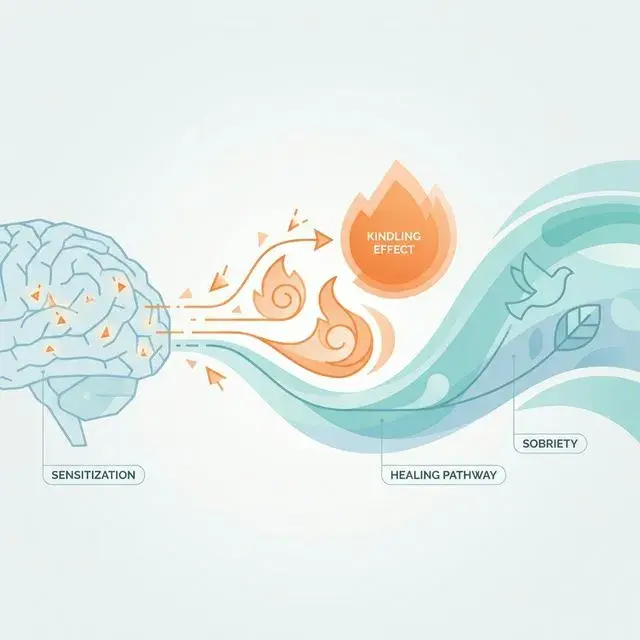
Voor mensen die herhaaldelijk ernstige black-outs of ontwenningsverschijnselen hebben gehad, kan de herstelcurve er anders uitzien. Het kindling-effect beschrijft hoe herhaalde ontgiftingscycli blijvende veranderingen in de prikkelbaarheid van de hersenen kunnen achterlaten, en het overlapt met het beeld van geheugenherstel. Kort samengevat: elke ronde van zwaar drinken en stoppen is zwaarder voor de hersenen dan de vorige, wat nog een argument is om eerder te stoppen dan later.
Wat het herstel verder helpt naast alleen stoppen met drinken
Stoppen is verreweg de grootste hefboom. Daarna zijn er vier dingen die het herstel van de hippocampus meetbaar versnellen of versterken.
Slaap, geprioriteerd als een baan. Het grootste deel van de langetermijngeheugenconsolidatie vindt plaats tijdens de diepe slaap en de REM-slaap die alcohol onderdrukt. Wanneer de slaaparchitectuur de kans krijgt om te normaliseren (wat meestal één tot drie maanden na het stoppen duurt), versnelt het geheugenherstel merkbaar. Bescherm je slaap krachtig in het eerste jaar: een vast schema, een donkere kamer, geen schermen laat op de avond, geen cafeïne na de lunch. De investering stapelt zich op.
Aerobe beweging. Aerobe training is de krachtigste niet-farmacologische aanjager van neurogenese in de hippocampus bij volwassen mensen. Drie of meer sessies per week van matig intensieve aerobe beweging (hardlopen, fietsen, stevig wandelen, zwemmen) vergroten in gerandomiseerde studies meetbaar het volume van de hippocampus. Het sluit naadloos aan op nuchterheid en is het dichtst in de buurt van een "geheugenmedicijn" dat de literatuur heeft gevonden.
Voldoende B-vitamines, vooral thiamine. De meeste mensen die stoppen met drinken hebben een licht thiaminetekort. Een standaard B-complex met thiamine (B1), B6, B9 (foliumzuur) en B12 dekt de basis. Mensen met een zwaardere drinkgeschiedenis hebben in de eerste weken vaak baat bij een thiaminekuur in een hogere dosering, idealiter onder begeleiding van een arts.
Cognitieve uitdaging. Nieuwe vaardigheden, nieuwe talen, nieuwe bewegingspatronen, regelmatig lezen, problemen oplossen: het drijft allemaal het soort activiteitsafhankelijke plasticiteit aan dat de hippocampus helpt zich te herbedraden. De hersenen die worden gebruikt herstellen sneller dan de hersenen die rust krijgen.
Voor het bredere beeld van supplementen tijdens het herstel brengt het artikel over essentiële supplementen voor alcoholherstel de combinatie voor botten, hersenen en energiesysteem in kaart waar de meeste mensen in het eerste jaar baat bij hebben.
Een kanttekening bij "gewoon een paar glaasjes" en geheugen
De meest gestelde vraag op dit gebied is of licht drinken prima is voor het geheugen. De eerlijke lezing van het huidige bewijs is dat geen enkele hoeveelheid alcoholinname neutraal is voor de hippocampus. De dosis-responscurve begint laag en stijgt continu. Mensen die één tot twee glazen per dag drinken vertonen in grote neuro-imagingcohorten een meetbare vermindering van het hippocampusvolume vergeleken met niet-drinkers. Het effect op dat niveau is klein. Het is ook reëel, en het stapelt zich op.
Dit is geen moreel oordeel. Het is een patroon in de data. Mensen die om hun langetermijngeheugen geven en een verandering willen aanbrengen die weinig moeite kost maar veel oplevert, ontdekken doorgaans dat het verminderen of elimineren van alcohol betrouwbaarder verschil maakt dan welk supplement, welke app of welk hersentrainingsprogramma dan ook.
De eerlijke conclusie
Geheugen is een van de dingen die mensen het meest vrezen te verliezen naarmate ze ouder worden, en alcohol is een van de meest beheersbare factoren die aan dat verlies bijdragen. De black-outs zijn de zichtbare waarschuwing. De langzame afbraak is het deel dat er uiteindelijk meer toe doet.
Het bemoedigende deel is dat de hersenen niet zo kwetsbaar zijn als de doemverhalen suggereren. De hippocampus is een van de meest plastische structuren in het lichaam, en hij reageert sneller en vollediger op onthouding, slaap en aerobe beweging dan de meeste andere beschadigde weefsels. Herstel in maanden. Volumewinst in het eerste jaar. Een andere dementiekoers over de decennia.
De insteek die helpt: elk alcoholvrij jaar is een storting in het geheugen dat je op je zeventigste zult hebben. Dat is niet metaforisch. De rekensom van de cumulatieve blootstelling is reëel en optellend. Mensen die in hun dertiger, veertiger en vijftiger jaren betekenisvolle pauzes nemen behouden meetbaar meer hersenen in hun zeventiger en tachtiger jaren.
Dit is een van de redenen waarom veel mensen beginnen met het bijhouden van alcoholvrije dagen ruim voordat ze zichzelf "in herstel" vinden. De hippocampus geeft niet om de taal die je over je drinken gebruikt. Hij houdt gewoon een lopende telling bij.
Wil je zien hoe je geheugen eruitziet na een betekenisvolle pauze van alcohol? Sober Tracker is een privé reekstellertje zonder account, gebouwd voor precies dit soort langetermijnexperiment. Combineer het met de gewoonte om elke ochtend één ding op te schrijven dat je je van gisteren herinnert, en kijk over drie maanden terug.
Dit artikel is educatief en geen vervanging voor medisch advies. Als je je zorgen maakt over je geheugen, black-outs of je drinken, praat dan met een zorgverlener. Plotseling stoppen na zwaar langdurig drinken kan gevaarlijk zijn en moet onder medisch toezicht gebeuren.