You're three weeks sober and you can't remember where you put your keys. Again. You're trying to focus on work, but your mind feels like it's swimming through molasses. You started this journey expecting clarity, but instead you've got brain fog thick enough to cut with a knife.
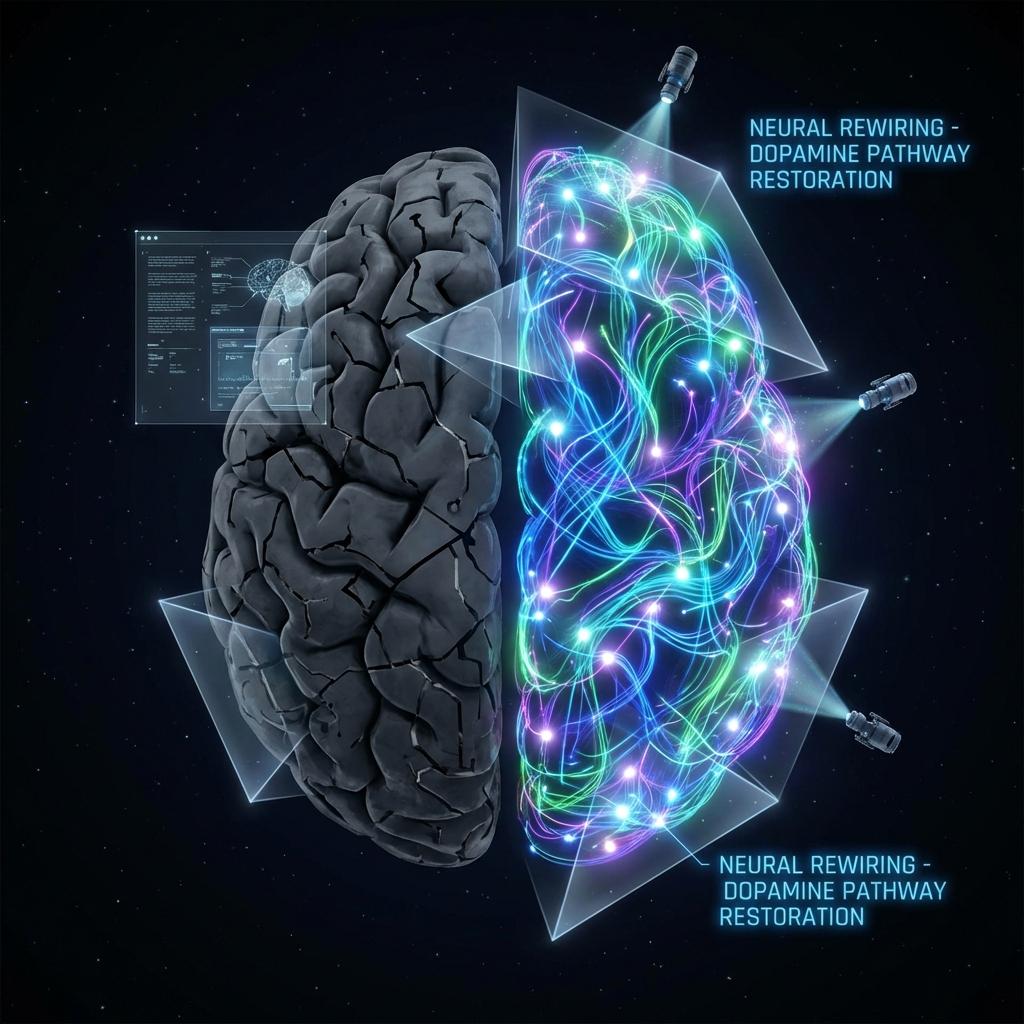
Here's what nobody tells you: your brain is actively healing right now. That fog you're experiencing? It's not permanent damage—it's construction dust. Your brain is literally rebuilding itself, and that process takes time.
The good news is remarkable: the human brain has an extraordinary capacity for recovery. Research shows that cognitive function can improve dramatically after quitting alcohol, with some abilities returning to near-normal levels. This article will show you exactly what's happening inside your head, when you can expect improvements, and how to support your brain's comeback.
What Alcohol Actually Does to Your Brain
Before we talk about healing, let's understand the damage. Alcohol isn't just a toxin that makes you feel fuzzy—it fundamentally alters your brain's structure and chemistry.
Structural Changes
Chronic alcohol use literally shrinks your brain. Studies using MRI imaging show that heavy drinkers have reduced gray matter (the part responsible for processing information) and white matter (the wiring that connects brain regions). The prefrontal cortex—your brain's CEO, responsible for decision-making, planning, and impulse control—takes a particularly heavy hit.
The hippocampus, your memory center, also shrinks with regular alcohol exposure. This explains those frustrating moments when you can't recall conversations, lose track of what you were doing, or struggle to learn new information.
Chemical Disruption
Alcohol floods your brain with artificial calm by boosting GABA (your brain's relaxation chemical) and suppressing glutamate (the excitatory chemical that keeps you alert). Over time, your brain compensates by reducing its own GABA production and ramping up glutamate receptors.
This is why anxiety spikes when you quit—your brain has been artificially suppressed for so long that it's now hyperactive without alcohol to dampen it down. It's also why early sobriety feels cognitively chaotic: your neurotransmitter systems are completely out of balance.
Neurotransmitter Depletion
Dopamine, serotonin, norepinephrine—alcohol disrupts them all. Your brain's reward system has been hijacked, which affects motivation, pleasure, mood, and cognitive function. This chemical chaos takes time to resolve, but resolve it does.
Not sure which app to use? We compared the top sobriety apps to make choosing easier.
The Cognitive Healing Timeline
Now for what you really want to know: when does it get better?
Every brain heals differently depending on factors like age, duration of drinking, overall health, and genetics. But research and countless recovery stories reveal a general pattern:
Week 1-2: The Fog Zone
What's happening: Your brain is in acute recovery mode. Neurotransmitters are wildly imbalanced. GABA and glutamate are recalibrating. You might experience intense brain fog, difficulty concentrating, memory lapses, and mental fatigue.
What you'll notice: This is often the hardest period cognitively. You might feel dumber than when you were drinking. Simple tasks feel overwhelming. Words escape you. This is normal and temporary. For more on what to expect during these first days, see our guide on your first 24 hours sober.
Week 2-4: First Glimpses of Clarity
What's happening: Neurotransmitter systems are beginning to stabilize. Your brain is starting to produce its own GABA again. Glutamate receptors are downregulating. Sleep patterns may be improving, which dramatically affects cognition.
What you'll notice: Moments of mental clarity break through the fog. You might have a morning where you feel genuinely sharp, followed by foggy afternoons. Memory starts improving. Concentration stretches from minutes to hours. You're not imagining it—this is real progress.
Month 1-3: The Rebuild Begins
What's happening: This is where the magic starts. Brain imaging studies show that gray matter volume begins increasing within weeks of abstinence. New neural connections are forming. Your prefrontal cortex is coming back online.
What you'll notice: Decision-making improves. You can think through problems more clearly. Working memory strengthens—you can hold more information in your head at once. Emotional reactions become less extreme as your prefrontal cortex regains control over your limbic system. Many people describe this phase as "feeling like myself again."
Month 3-6: Significant Recovery
What's happening: Substantial structural healing is underway. The hippocampus is regenerating. White matter connections are strengthening. Your brain's default mode network—which was disrupted by alcohol—is normalizing.
What you'll notice: Learning new things becomes easier. Long-term memory improves. Complex thinking feels natural again. Many people report their best cognitive performance in years during this period. The difference between month 1 and month 6 is often dramatic.
Month 6-12+: Continued Improvement
What's happening: Your brain continues to heal and optimize. Neurogenesis (the birth of new brain cells) continues. Neural networks become more efficient. Some studies suggest cognitive improvements continue for years into sobriety.
What you'll notice: Cognition feels stable and reliable. You're not just "back to normal"—many people describe thinking more clearly than they have since their teens or early twenties. The mental energy that used to go toward managing hangovers and cravings is now available for actual thinking.
What Specifically Improves
Let's break down the specific cognitive functions that recover:
Memory
Short-term memory: The ability to hold information temporarily (like a phone number you just heard) improves significantly within the first month. No more walking into a room and forgetting why you're there.
Working memory: Your mental workspace—the ability to manipulate information in your head—strengthens over 1-3 months. Complex problem-solving becomes possible again.
Long-term memory: Both the encoding of new memories and retrieval of old ones improve. By 3-6 months, many people notice they're forming clear, detailed memories of their days again—something that may have been fuzzy for years.
Attention and Focus
Sustained attention: The ability to concentrate on one task for extended periods returns gradually. Early sobriety might give you 15 minutes of focus; by month 3, you might manage hours of deep work.
Selective attention: Filtering out distractions becomes easier. Your brain stops being overwhelmed by competing stimuli.
Divided attention: Multitasking ability improves as your cognitive resources expand. Things that felt overwhelming become manageable.
Executive Function
Decision-making: Your prefrontal cortex recovery means better judgment, less impulsivity, and the ability to weigh long-term consequences. This is one of the most profound improvements many people experience.
Planning and organization: Complex projects feel possible again. You can think multiple steps ahead without losing track.
Impulse control: As your prefrontal cortex strengthens, you gain better control over reactive behaviors—not just drinking urges, but all impulses.
Processing Speed
Mental quickness returns. Conversations flow more naturally. Reading comprehension improves. The frustrating lag between thought and expression diminishes. Many describe this as "the fog lifting."
Verbal Fluency
Word-finding improves. The tip-of-the-tongue phenomenon becomes less frequent. Articulating thoughts feels easier. Writing and speaking become more fluid.
Emotional Regulation
While not purely "cognitive," emotional control is processed by the brain and improves dramatically. The hair-trigger reactions of early sobriety smooth out. You can experience emotions without being overwhelmed by them. For more on this topic, see how sobriety quiets your inner critic.
The Science of Neuroplasticity
Here's the incredible part: your brain isn't just returning to baseline. It's actively rewiring itself through a process called neuroplasticity.
What Is Neuroplasticity?
Neuroplasticity is your brain's ability to change its structure and function in response to experience. New neural connections form. Unused pathways weaken. Entire networks reorganize. This process happens throughout life but is particularly active during recovery.
Neurogenesis: New Brain Cells
For decades, scientists believed adult brains couldn't produce new neurons. We now know that's wrong. The hippocampus, in particular, can generate new brain cells throughout life—a process called neurogenesis. Alcohol suppresses neurogenesis; sobriety restores it.
This is why recovery isn't just about restoring what was lost. Your brain is literally growing new cells and forming new connections that may not have existed before.
Synaptic Pruning and Strengthening
Your brain is constantly pruning unused connections and strengthening frequently used ones. During drinking, the pathways associated with alcohol were reinforced while others weakened. In sobriety, this reverses. Alcohol-related neural pathways weaken from disuse while healthy connections strengthen.
This is why new habits and activities are so important in recovery—you're literally building new brain architecture.
How to Support Your Brain's Healing
Your brain will heal on its own with abstinence. But you can accelerate and optimize the process:
1. Prioritize Sleep
Sleep is when your brain does its deepest healing work. During sleep, your brain clears metabolic waste, consolidates memories, and repairs neural connections. Poor sleep in early sobriety can slow cognitive recovery.
- Aim for 7-9 hours per night
- Maintain consistent sleep and wake times
- Create a dark, cool sleeping environment
- Avoid screens for an hour before bed
Yes, sleep can be difficult in early sobriety. It gets better, and it's worth prioritizing even when it's hard.
2. Exercise Regularly
Physical exercise is one of the most powerful brain-healing interventions available. It increases BDNF (brain-derived neurotrophic factor), which promotes neurogenesis and neural plasticity. It also improves blood flow to the brain, reduces inflammation, and boosts mood-regulating neurotransmitters.
- Aim for at least 150 minutes of moderate exercise per week
- Include both cardio and strength training
- Even walking counts—movement is movement
- Consistency matters more than intensity
For more on this connection, see our article on how sobriety transforms your fitness.
3. Nourish Your Brain
Your brain needs raw materials to rebuild. Key nutrients include:
- Omega-3 fatty acids: Found in fatty fish, walnuts, and flaxseeds. Essential for brain cell membranes and reducing inflammation.
- B vitamins: Alcohol depletes B vitamins, especially B1 (thiamine). Consider a B-complex supplement and eat whole grains, eggs, and leafy greens.
- Antioxidants: Found in colorful fruits and vegetables. Combat oxidative stress from alcohol damage.
- Protein: Provides amino acids for neurotransmitter production. Include lean proteins with every meal.
Stay hydrated too—your brain is about 75% water, and even mild dehydration impairs cognitive function.
4. Challenge Your Mind
Neuroplasticity responds to demand. Challenge your brain with new learning and mental stimulation:
- Learn a new skill (language, instrument, craft)
- Read challenging material
- Do puzzles, crosswords, or strategy games
- Take up a hobby that requires concentration
- Have complex conversations
The key is novelty and challenge. Your brain grows strongest when it's working on something difficult and new. See our guide on finding new hobbies in sobriety for ideas.
5. Manage Stress
Chronic stress floods your brain with cortisol, which impairs memory, shrinks the hippocampus, and slows healing. Stress management isn't optional—it's essential for cognitive recovery.
- Practice meditation or mindfulness (even 10 minutes daily helps)
- Try deep breathing exercises
- Spend time in nature
- Maintain social connections
- Set boundaries to reduce unnecessary stressors
6. Stay Social
Social interaction is cognitive exercise. Conversation requires attention, memory, language processing, and emotional regulation all at once. Isolation, on the other hand, accelerates cognitive decline.
You don't need a huge social circle—quality matters more than quantity. Regular meaningful connection with even one or two people supports brain health.
What to Realistically Expect
A few important reality checks:
Recovery Isn't Linear
You'll have great days and terrible days. A foggy morning at month 3 doesn't mean you're regressing. Brain healing happens in waves, not a straight line. Trust the overall trajectory, not individual data points.
Your Starting Point Matters
Someone who drank heavily for 20 years will have a different recovery timeline than someone who drank moderately for 5 years. Age, genetics, overall health, and other factors all influence healing speed. Compare yourself to yourself, not to others.
Some Effects May Be Long-Lasting
For most people, most cognitive effects of alcohol are reversible. But severe, long-term alcohol use can cause some permanent changes. The good news is that even in these cases, significant improvement is possible. Your brain may find alternative pathways to accomplish what damaged areas used to do.
PAWS Is Real
Post-Acute Withdrawal Syndrome (PAWS) can cause waves of cognitive symptoms for months into sobriety. If you experience periodic returns of brain fog, difficulty concentrating, or memory issues, you may be experiencing PAWS. It's temporary and normal. Learn more about PAWS and how to cope.
Patience Is Essential
Your brain didn't get this way overnight, and it won't heal overnight. The most important thing you can do is stay sober and give your brain time. Every alcohol-free day is a day of active healing, even when you can't feel it.
The Bottom Line: Your Brain Is Already Healing
Right now, as you read this, if you're sober today, your brain is healing. Neural connections are forming. Neurotransmitters are rebalancing. Gray matter is regenerating. This is happening whether you feel it or not.
The brain fog, the memory lapses, the difficulty concentrating—these are not signs of permanent damage. They're signs of a brain in active reconstruction. The cognitive costs you're paying now are temporary. The cognitive gains ahead are remarkable.
Researchers who study alcohol recovery consistently report findings that surprise even them: the brain's capacity to heal is greater than we ever imagined. People who thought they'd lost their minds forever find themselves thinking with clarity they hadn't experienced in decades.
Your cognitive comeback is underway. The fog will lift. The clarity will come. The you that you remember—sharp, quick, capable—is not gone. That person is being rebuilt, one alcohol-free day at a time.
Trust the process. Support your brain. And keep going.
The best thing you can do for your brain is the thing you're already doing: not drinking today.