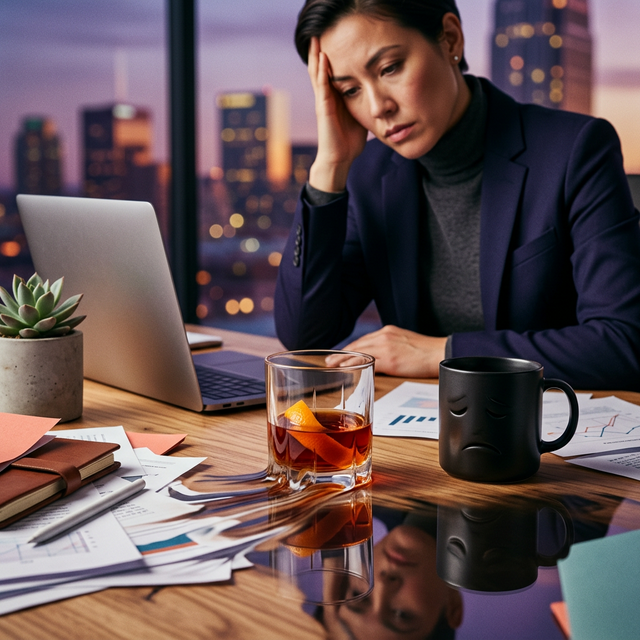
Burnout is the defining epidemic of the modern workplace. The endless emails, the constant Slack pings, the pressure to always be "on"—it all accumulates into a profound physical and emotional exhaustion.
For many high-achieving professionals, the socially acceptable antidote to this exhaustion is simple: poured into a glass at 6 PM. The "wine down," the after-work beers, the weekend bender to blow off steam. We reach for alcohol believing it's the ultimate stress relief.
But what if the very thing we're using to cope is actually fueling the fire?
The Burnout-Alcohol Feedback Loop
When you're chronically stressed, your body is flooded with cortisol and adrenaline. Your nervous system is stuck in "fight or flight" mode. When you drink, alcohol acts as a depressant on your central nervous system. It temporarily suppresses the anxiety and mimics the feeling of relaxation.
For a few hours, the emails don't matter. The deadlines fade away. You finally feel like you can breathe.
But this relief is an illusion. As the alcohol wears off, your brain—which had down-regulated its own calming neurotransmitters (like GABA) to compensate for the depressive effects of the alcohol—suddenly swings in the opposite direction.
Your cortisol levels spike. Your anxiety returns, often louder than before. This is the phenomenon of hangxiety.
To handle the stress of the hangover and the returning work anxiety, what do you do the next evening? You drink again. The cycle is set.
If you're still choosing a tracking app, our guide to the best sobriety apps compares the top options side by side.
Why Alcohol Sabotages Your Recovery from Burnout
Recovering from burnout requires deep rest, neurological recalibration, and sustained energy. Alcohol actively prevents all three.
1. It Destroys Restorative Sleep
You might fall asleep faster after a few drinks, but the quality of that sleep is severely compromised. Alcohol specifically suppresses REM sleep and deep sleep—the phases your brain desperately needs to process stress and repair physical exhaustion. Without deep sleep, you wake up exhausted, making the next workday even harder.
2. It Drains Your Emotional Resilience
Burnout significantly lowers your threshold for handling stress. Alcohol depletes your dopamine and serotonin reserves, leaving you emotionally fragile. Small workplace annoyances that you could normally brush off suddenly feel like catastrophic crises.
3. It Steals Your Time
When you're burned out, time feels like your most scarce resource. Drinking not only consumes your evening hours but also steals your morning energy. Instead of using your weekend to actually recover, engage in hobbies, or exercise, you spend Saturday morning recovering from Friday night.
The Sobriety Advantage
Quitting drinking doesn't magically make your demanding boss disappear or your inbox empty. But it fundamentally changes your ability to handle them.
When I removed alcohol from the equation, the changes to my work life were profound:
- True Rest: For the first time in years, a weekend actually felt restorative. I returned to work on Monday with actual energy, rather than just running on caffeine and anxiety.
- Sharper Boundaries: Without the crutch of evening alcohol to numb the stress of overworking, I was forced to set actual boundaries. I closed my laptop at 5:30. I stopped answering emails on Sundays. Because I could no longer drink away the stress of overworking, I had to stop overworking.
- Consistent Energy: The mid-afternoon energy crashes vanished. My productivity stabilized. I was no longer borrowing energy from tomorrow to get through today.
Breaking the Cycle
If you suspect your "stress relief" drinks are actually contributing to your burnout, you don't have to hit "rock bottom" to make a change. You can just decide that the math no longer works for you.
Try an experiment. Take 30 days off drinking. Not as a punishment, but as a data-gathering exercise.
Notice how your sleep changes. Notice how you handle that stressful Tuesday meeting without a Monday night hangover. Notice the space that opens up in your evenings when you aren't focused on pouring the next glass.
Burnout tells you that you're trapped and exhausted. Alcohol agrees with it, keeping you numb to the reality of the trap. Sobriety gives you the clarity—and the energy—to finally build a way out.
"The irony of drinking to relieve stress is that it destroys the very resilience you need to handle it."
Take control of your recovery and track your progress with our app. A clear mind is your best asset.