"Write drunk, edit sober."
It’s one of the most famous quotes in the literary world. It’s also a misattribute (Hemingway likely never said it) and, more importantly, terrible advice.
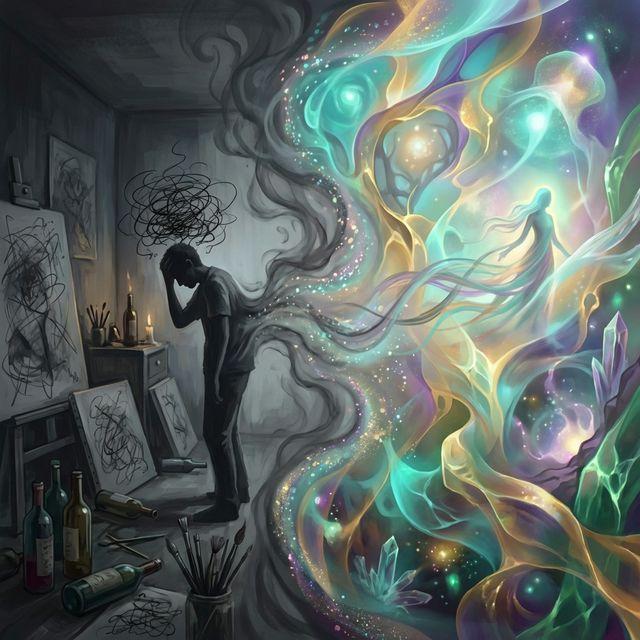
For decades, the "tortured artist" archetype has dominated our cultural understanding of creativity. We imagine the genius writer with a bottle of whiskey, the painter in a haze of absinthe, or the musician composing masterpieces while strung out. We’ve been sold a story that addiction is the toll you pay for genius, and that sobriety is the death of the "spark."
But what if the bottle isn't the muse? What if it's actually the cage?
The Science of Stifled Creativity
The belief that alcohol unlocks creativity is largely anecdotal. The science, however, says the exact opposite.
1. Alcohol Kills "Aha!" Moments (REM Sleep)
True creativity often happens when we aren't working. It’s that sudden insight in the shower or the solution that appears after a good night's sleep. This is your brain connecting disparate ideas, a process that relies heavily on REM sleep.
Alcohol severely disrupts REM sleep. Even a couple of drinks can suppress the REM stage, meaning your brain loses its prime time for consolidating memories and making the abstract connections necessary for innovation. You might wake up feeling "fine," but your creative engine is running on fumes.
2. The Prefrontal Cortex Dampening
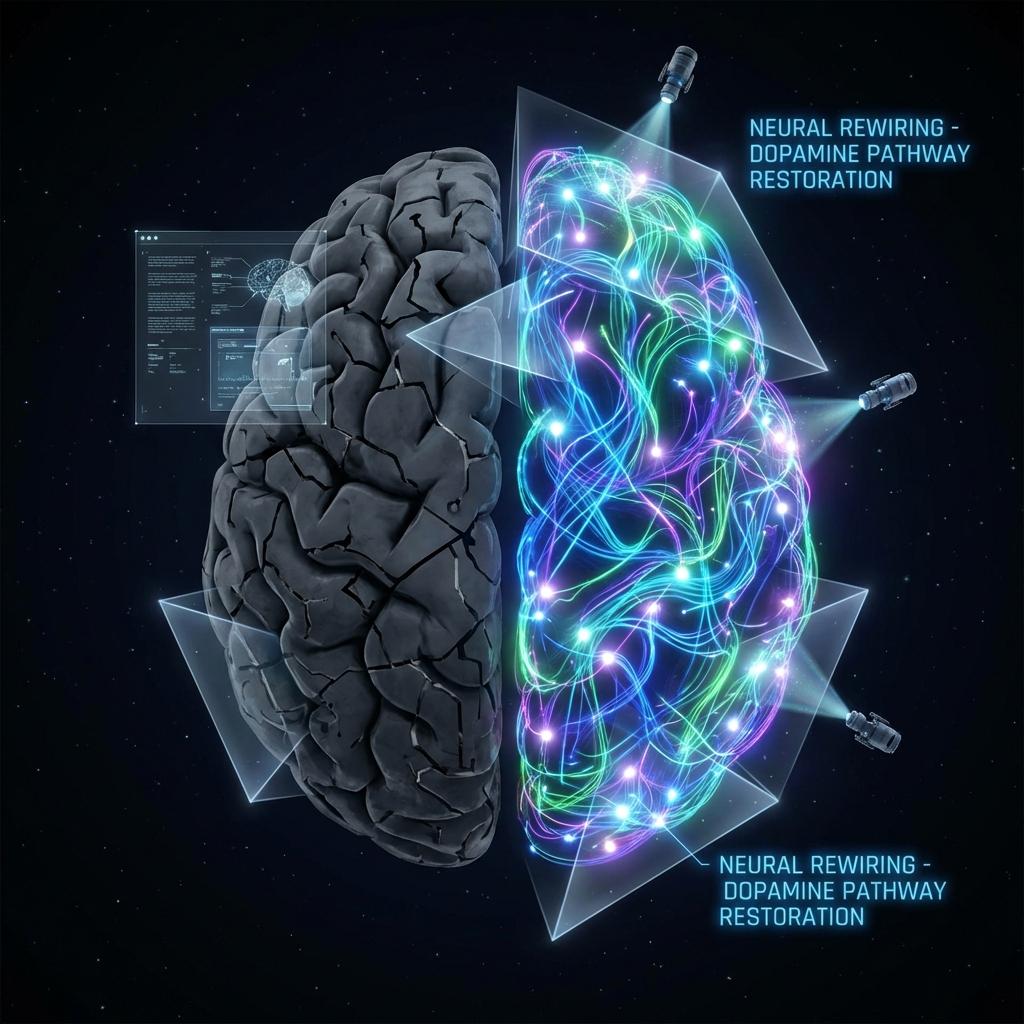
Alcohol depresses the prefrontal cortex—the part of your brain responsible for planning, decision-making, and complex thought. While this might lower inhibitions (which some mistake for creativity), it also drastically lowers your ability to execute on those ideas.
Great art isn't just about having a wild thought; it's about the discipline to structure it, refine it, and bring it to life. Alcohol gives you the wild thought but steals the tools you need to build it.
A free sobriety tracker app makes progress like this much easier to see, and our comparison guide breaks down which ones do it best.
The "Flow State" Killer
Mihaly Csikszentmihalyi, the psychologist who coined the term "Flow," described it as a state of complete immersion, focus, and joy in the activity itself. It is the holy grail for any creative.
Flow requires a delicate balance of challenge and skill, and it demands hyper-awareness. Alcohol numb us. It blunts the subtle internal signals—boredom, frustration, curiosity—that guide us deeper into the work.
When you drink to create, you aren't entering a Flow state; you are often just lowering your standards. What feels like "profound" at 11 PM after three glasses of wine often reads like nonsense the next morning.
Famous Sober Creatives Who Debunk the Myth
If you’re terrified that sobriety will make you boring, look at the data points that prove otherwise. Some of the most prolific and groundbreaking artists did their best work after getting sober.
- Stephen King: He barely remembers writing Cujo due to his addiction. Since getting sober in the late 80s, he has published dozens of bestsellers, maintaining a level of consistency that is legendary.
- Eminem: After nearly dying from an overdose, he got sober and released Recovery, winning a Grammy and proving he hadn't lost his edge.
- Trent Reznor (Nine Inch Nails): He feared sobriety would kill his music. Instead, he went on to score Oscar-winning films (
The Social Network,Soul) and create some of his most complex work.
The Sober Advantage
Sobriety doesn't just give you your health back; it gives you a competitive advantage in your art.
1. Consistency Over Chaos
The romanticized "bursts of genius" are exhausting and unreliable. Sobriety allows you to show up every single day. You trade the manic highs and depressive lows for a sustainable rhythm. You become a professional, not a tourist in your own craft.
2. Emotional Depth
Alcohol is a numbing agent. It keeps you from feeling the full weight of your emotions. When you get sober, the "raw nerve" feeling returns. This can be painful, but for an artist, it is gold. You have access to the full spectrum of human experience again—joy, grief, boredom, rage—in high definition.
3. You Actually Finish Things
How many half-written novels or sketched canvases are collecting dust? Addiction is the enemy of completion. Sobriety gives you the executive function to push through the "messy middle" of a project and actually ship the work.
Conclusion: Try Creating Without the Crutch
If you’ve linked your creative identity to your drinking, the idea of separating them feels like an amputation. But it’s not. It’s a liberation.
You don't need to destroy yourself to create something beautiful. In fact, your best work is likely waiting for the clear-headed, fully present version of you to write it.
Struggling to break the cycle?
- Track your progress: Download Sober Tracker to visualize your journey and see how your creative output improves with every sober day.
- Manage the stress: If creative blocks make you anxious, use Anxiety Pulse to measure and manage your physiological stress response instead of reaching for a drink.