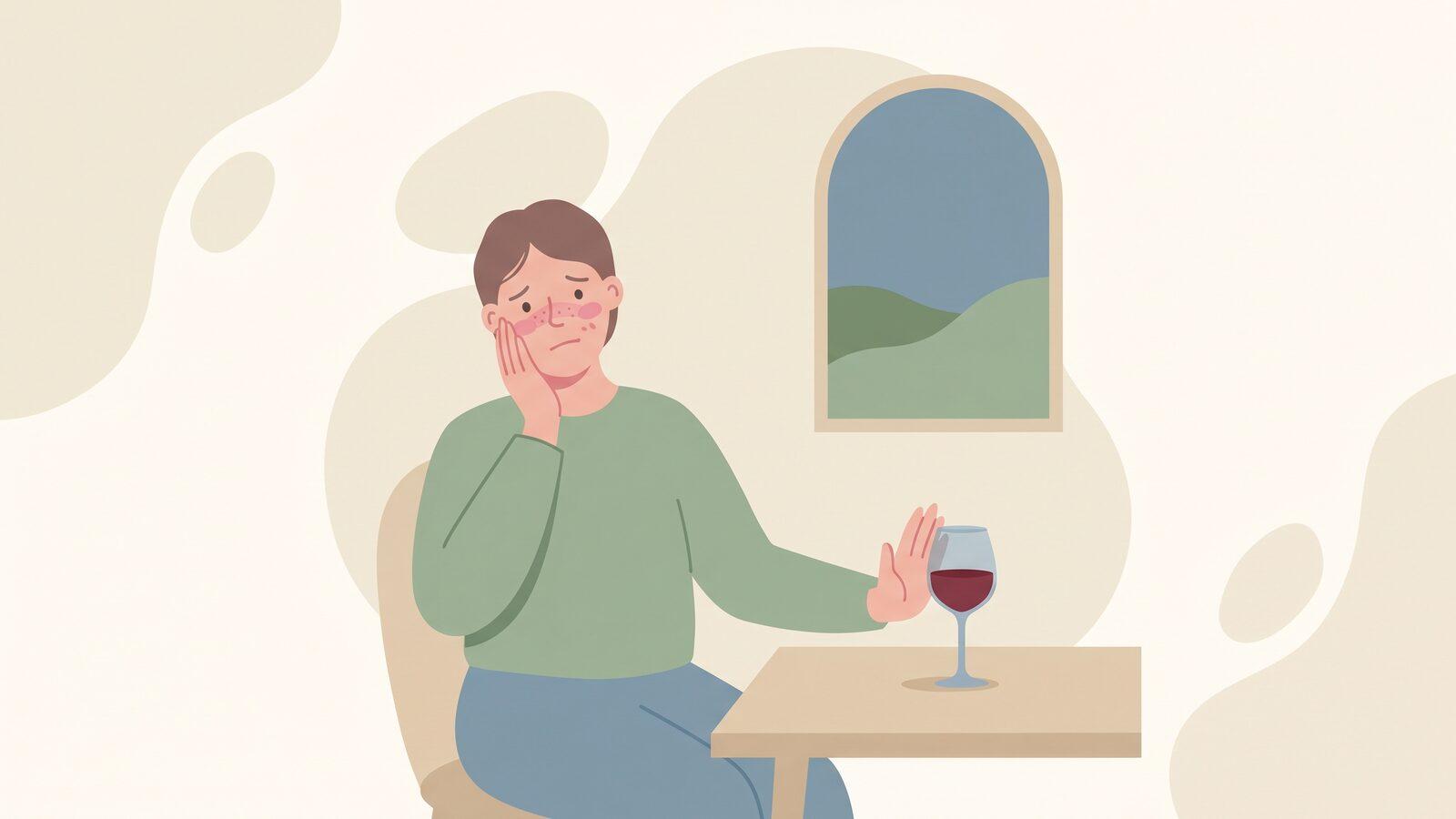
You stop drinking and expect your skin to settle down. Instead, your arms itch at night, a rash appears, or your skin feels uncomfortable without any visible change. It is easy to connect the two events and assume this is another stage of recovery.
Itchy skin after quitting alcohol has no single explanation. It is not proof that toxins are leaving your body, and there is no reliable day-by-day timeline for it. Dry skin, irritation, a skin condition, medicines, and some internal illnesses can all cause itching. The timing deserves attention, but it does not establish the cause.
This guide is about deciding what to notice and what to do next. For broader appearance changes, our skin recovery guide covers a different question: how skin may change over time without alcohol.
Start with what the itching actually looks like
Before searching for a recovery milestone, write down a few concrete details. Is the itching in one patch or all over? Is there a rash, raised area, scaling, or broken skin? Did a new soap, laundry product, supplement, or medicine start around the same time? Does it interrupt sleep or keep returning?
These observations help a clinician or pharmacist far more than calling it a detox rash. If a visible rash changes, a clear photograph can also be useful at an appointment. Avoid repeatedly scratching or inspecting the same area to test whether it still itches; that can leave irritation that makes the original pattern harder to see.
Do not use the absence of a rash as reassurance that nothing needs checking. Some causes of itching do not produce an obvious skin change. Equally, a small dry patch does not establish liver disease. The pattern and accompanying symptoms matter together.
Common skin problems can coincide with stopping alcohol
A change in drinking often comes with changes in daily life: more showers after exercise, different snacks, new skin products, or a new bedtime routine. Any new exposure is worth noting rather than automatically blaming alcohol withdrawal.
The NHS overview of itchy skin lists dry or irritated skin and conditions such as eczema among possible explanations. It recommends medical review when itching is severe, persistent, widespread, or disruptive. A pharmacist can help with mild skin symptoms and suggest whether a particular product is appropriate.
For mild, localized itching, keep skin care simple. Try an unperfumed moisturizer, a cool compress, and lukewarm rather than hot showers. Wear comfortable clothing and avoid adding several treatments at once. If a product stings or makes the area worse, stop using it and seek advice.
Drinking more water is not a universal treatment for itching. There is no need to force large amounts of fluid or buy a detox product because your skin feels different. A symptom that persists needs its own explanation.
Itching and alcohol withdrawal are not interchangeable
Alcohol withdrawal can be dangerous in people who are physically dependent. An itchy patch by itself cannot tell you whether withdrawal is happening or how severe it is. Nor does the absence of itching tell you that stopping abruptly is safe.
The NHS guidance on alcohol-use disorder explains that severe withdrawal may include confusion, seizures, or hallucinations. A new sensation of insects crawling on or under the skin, especially with shaking, agitation, confusion, or other unusual perceptions after stopping or sharply reducing drinking, needs urgent medical assessment. Do not assume it is ordinary dry skin.
If you drink heavily and regularly or have had withdrawal before, arrange medical support for stopping. A tracker, skin cream, or internet timeline cannot manage withdrawal. If you are already receiving treatment, report new symptoms to the team looking after you rather than adjusting medication yourself.
When liver disease belongs in the conversation
Itching can occur in some liver conditions. That does not mean every itch after quitting is caused by the liver, but it is a reason not to label persistent whole-body itching as a harmless recovery phase.
The Northern Care Alliance information on alcohol-related liver disease includes itching among possible symptoms. If itching appears with yellow skin or eyes, dark urine, pale stools, abdominal swelling, or significant illness, get medical advice promptly. Tell the clinician about your alcohol history and when you stopped.
A clinician may examine your skin, review medicines and exposures, and decide whether blood tests or other investigations are appropriate. The purpose is to identify a cause, not to judge your progress. Our article on pain under the right ribs after quitting explains why another symptom in this area also deserves assessment rather than a recovery countdown.
Check new medicines and supplements without guessing
If you started a medicine around the time you stopped drinking, mention it when asking about itching. Include nonprescription products and supplements, even if the label describes them as natural. A list of names, doses, and start dates is more useful than trying to remember everything during the appointment.
Do not add sedating antihistamines or sleep products without checking with a pharmacist, particularly if you take medication for withdrawal or another health condition. The treatment that helps one kind of itch may not help another, and drowsiness is not evidence that the cause is resolved.
A rapidly developing reaction with swelling of the lips or tongue, breathing difficulty, or faintness is an emergency. The NHS guidance on anaphylaxis describes these warning signs. Seek emergency help rather than waiting to see whether a cream works.
Keep a useful record, then stop checking constantly
A short daily note is usually more useful than repeated body checks. Record when the itching started, where it occurs, whether a rash is visible, any new products or medicines, and whether sleep is affected. Bring the notes to your appointment if the problem continues.
Sober Tracker can help you keep your alcohol-free timeline visible. Keep symptom details separately if needed, and use the timeline as context rather than a diagnosis. An alcohol-free day count cannot tell you whether itching is eczema, an exposure, withdrawal, or another condition.
If you previously reacted while drinking, our alcohol intolerance and flushing guide may help you describe that history. A reaction during drinking and itching after stopping are different patterns, so explain both rather than treating them as automatically equivalent.
What to do next
For mild itching in a small area, simplify skin care and ask a pharmacist if you need help choosing a product. Arrange medical review if itching is widespread, keeps coming back, does not improve, or interferes with daily life or sleep. Seek prompt or emergency care for the accompanying symptoms described above.
You do not need to decide whether quitting caused the itching before asking for help. Keep the useful change you have made, get the symptom assessed on its own merits, and avoid a promised detox timeline that the evidence cannot provide.
This article is for general information and does not replace medical advice, diagnosis, or treatment.